



Choosing the right scale for your custom model railroad is crucial.
It affects everything from space to detail and overall enjoyment.
You don’t need to be an expert to make the right choice.
This guide simplifies the process for beginners and hobbyists alike.
The key to success is thoughtful custom model railroad scale selection.
This step sets the foundation for your entire project.
A good custom model railroad scale selection ensures your layout works perfectly.
It prevents frustration and wasted time later on.
First, understand what a scale is. Scales define size ratios.
A model scale compares the model’s size to the real thing.
For example, HO scale is 1:87—1 inch equals 87 inches in real life.
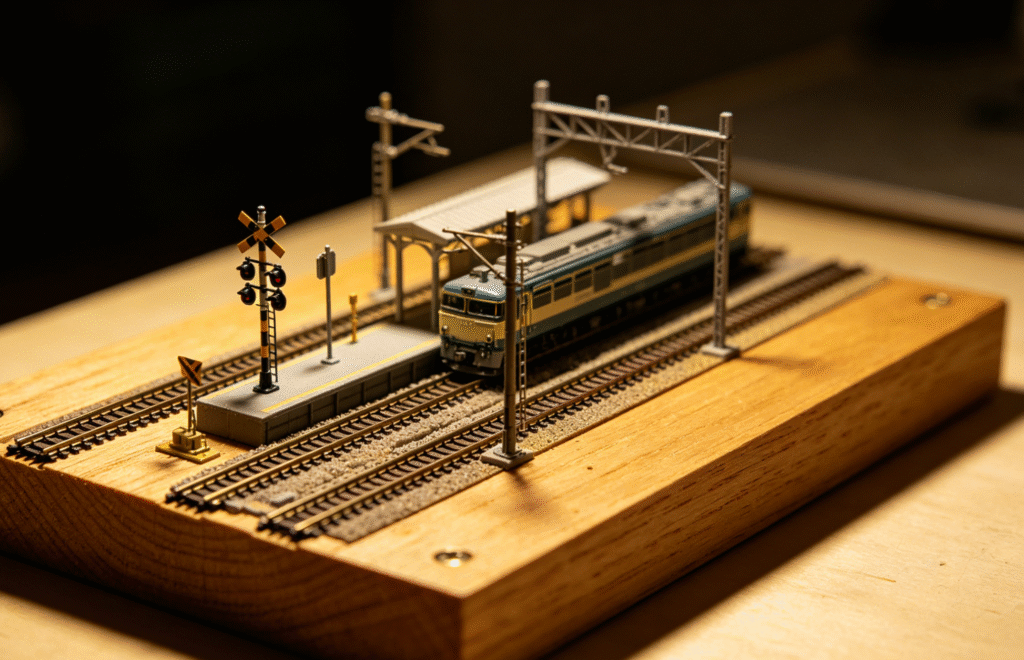
Every Scale Model Railroad uses a specific scale.
Your custom model railroad scale selection depends on your space.
Small spaces need smaller scales. Large spaces can handle bigger ones.
Measure your available area before deciding.
A tabletop works well for compact scales like N or HO.
Custom model railroad scale selection must align with your space.
Consider your detail preferences. Do you love tiny details?
Larger scales (like O or G) let you add more detail.
Smaller scales (like N) are compact but still detailed.
This matters for Custom Model Railway Buildings and other elements.
Your custom model railroad scale selection should match your detail goals.
Think about your budget. Scales affect cost.
Larger scales often cost more—trains and parts are bigger.
Smaller scales are more budget-friendly for beginners.
Factor in long-term costs, too—expanding your layout later.
Custom model railroad scale selection should fit your budget.
Consider your skill level. Some scales are easier for beginners.
HO scale is the most popular—it’s easy to work with.
It’s a great choice if you’re learning to Build Model Railroad layouts.
Larger scales are more forgiving for first-time builders.
Custom model railroad scale selection should match your experience.
Think about future expansion. Do you want to grow your layout?
Choose a scale with plenty of available parts and accessories.
HO and N scales have the most options on the market.
This includes Custom Model Train Station Miniature and scenery pieces.
Custom model railroad scale selection affects future growth.
Test different scales if you can. Hold model trains or buildings.
See how they feel in your hands. Imagine them in your space.
Hobby stores often have display models to examine.
This helps you make a confident custom model railroad scale selection.
Match the scale to your scenery. Custom Model Railroad Scenery must fit.
Trees, buildings, and figures need to match the scale.
A mismatched scale makes your layout look unbalanced.
Custom model railroad scale selection ties into every part of your project.
Don’t overcomplicate it. There’s no “perfect” scale.
The right scale is one that fits your space, budget, and style.
Trust your instincts as you make your custom model railroad scale selection.
Common scales to consider: HO, N, O, and G.
HO (1:87): Most popular, balanced size and detail.
N (1:160): Compact, great for small spaces.
O (1:48): Larger, more detail, good for beginners.
G (1:22.5): Biggest, perfect for outdoor layouts.
Your custom model railroad scale selection depends on your needs.
Finalize your choice. Once you decide, stick with it.
Mixing scales ruins the realism of your layout.
Embrace your choice and start building your dream layout.
A thoughtful custom model railroad scale selection makes the hobby more enjoyable.
Remember, the goal is to have fun and create something you love.
Your scale choice is the first step to a amazing custom model railroad.
With these tips, your custom model railroad scale selection will be a success.
You’ll have a layout that fits your space, budget, and style.

Leave a Reply