
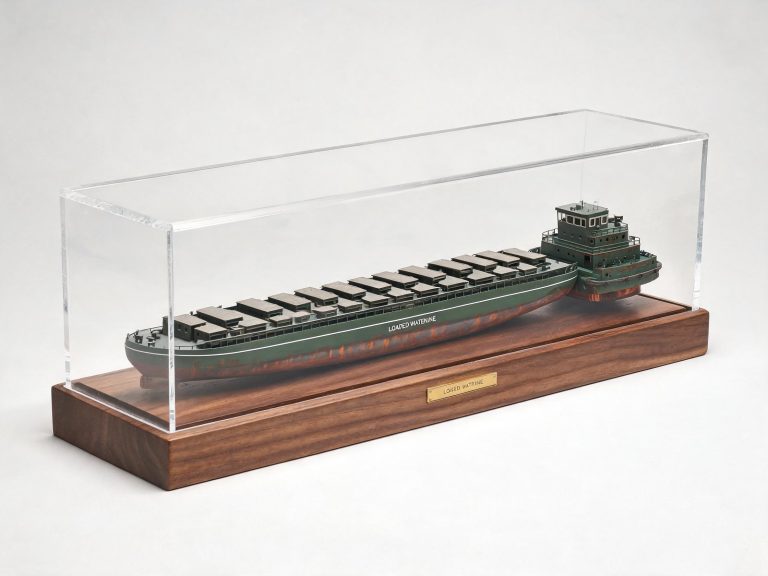
A ship model for museums has to survive a different kind of scrutiny. Visitors study it for hours. Curators compare it against plans. Board members ask where it came from.
That is why museum commissions are built differently — from naval drawings, with documentation, and with provenance built in from day one.
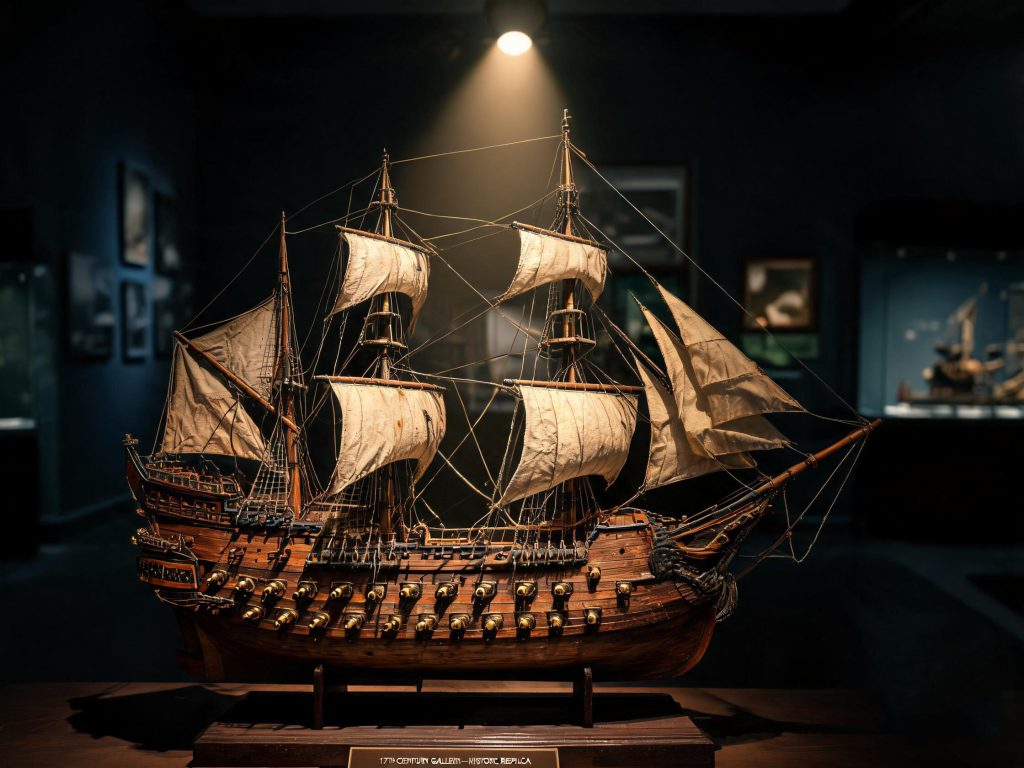
Built From Naval Drawings, Not Guesswork
Museum builds start from the real thing: builder’s plans, hull lines, rigging plans or archival photographs.
Where drawings are incomplete, we reconstruct from comparative vessels of the period and record every assumption. Nothing in the model is invented silently.
The hull is lofted to scale on 24 station lines, deck by deck. A 1.5 m model at 1:96 carries about 900 separate rigging lines, roughly 1.2 km of thread.The same reconstruction standard is documented in our historic ship replica service.
Most museum commissions land between 1:48 and 1:200. A 60 m schooner at 1:96 measures 625 mm. The same ship at 1:48 is 1250 mm, and needs a case a curator can walk around.
The Construction Archive
Every museum commission ships with a full construction archive:
- Design files. Hull lines, deck plans and the 3D model used for approval.
- Progress photography. The build documented week by week, from lofting to final rigging.
- Materials list. Hull, deck, rigging and case materials, specified for conservation planning.
- A numbered certificate. The model, the archive and the certificate carry the same number.
A typical archive runs 40 to 60 pages. For registrars, this documentation supports exhibit labels and provenance records directly. See it applied in our historic ship replica case.
Matching the Collection
Museum commissions rarely stop at one vessel. Collections grow by theme:
- Historic sail. A wooden tall ship model anchors a maritime gallery.
- Naval history. Our custom warship model replica line covers refit-accurate fighting ships.
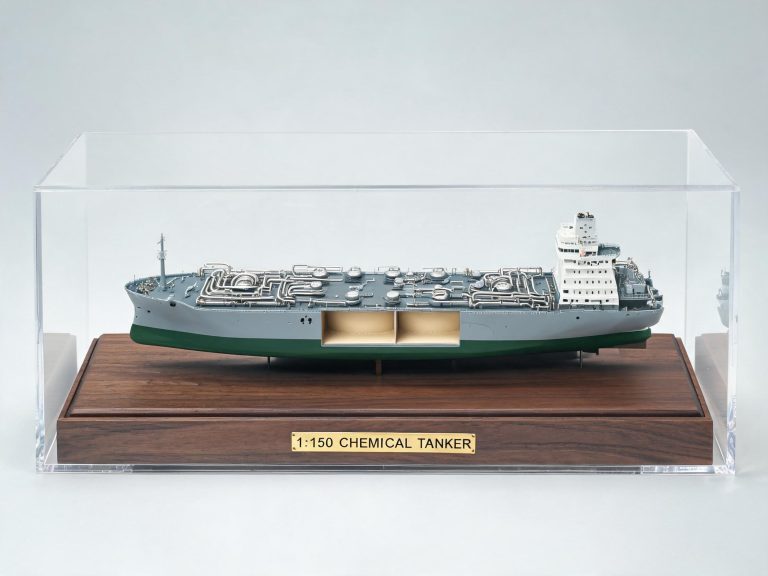
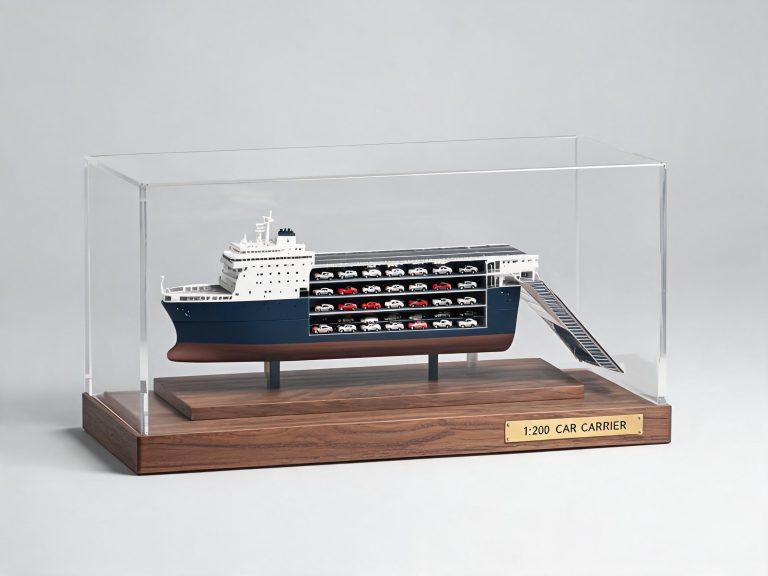
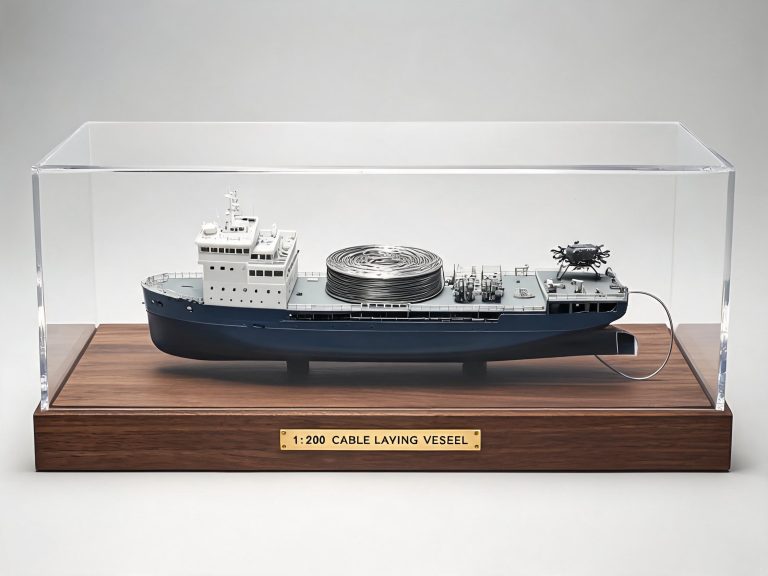
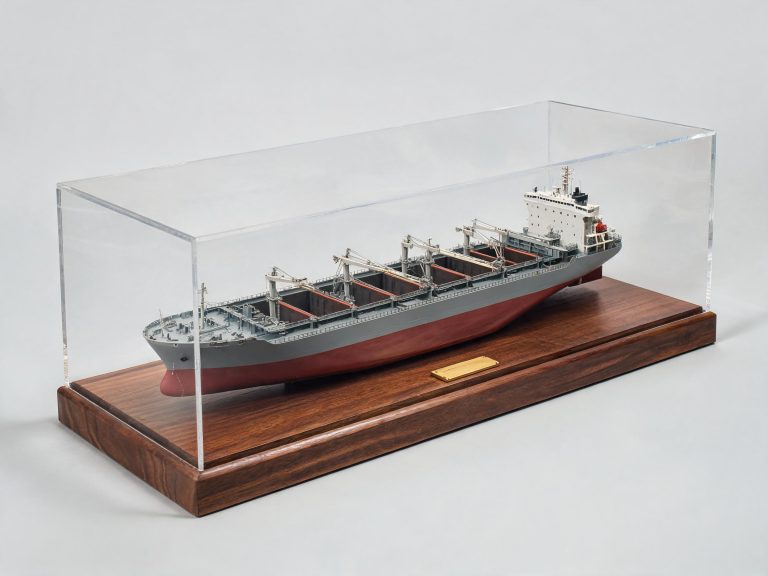
- Modern fleets. The museum grade ship model service handles 1.5 m+ builds from naval drawings.
Mixed collections ship with matching base heights and case standards, so the gallery reads as one exhibition. Base height across a set is held to 1 mm.
Which Display Case Suits a Museum Collection?
A museum model should not be cased as an afterthought. Cases are engineered alongside the model.
UV-protective glass. Blocks about 98% of UV under 380 nm. Paint and rigging are protected from light damage.
Dust sealing. Gasket seals hold case humidity within 5% of room level. Cleaning intervals drop from weeks to years.
Internal LED lighting. 3000 K, low heat, diffused, tuned to the exhibition space.
Structural base. Seismic-rated fixing points available on request.
Delivery and Handover
- Custom crates. 12 mm plywood shell, 30 mm foam bedded to the hull lines, bolted and shock-indicated.
- Fully insured door-to-door freight. Including customs paperwork for institutional buyers.
- Remote video guidance. Numbered setup instructions plus a live session with our technicians for unboxing, assembly and lighting calibration.
- 1-year warranty. Parts and workmanship, with lifetime remote support.
FAQ
What does a museum-grade ship model cost? — Builds over 1.5 m from naval drawings start around USD 30,000, depending on length, rigging and case specification.
Can you work from our archival plans only? — Yes. Drawings alone are enough. We loft the hull and submit a 3D render for curatorial review before production.
How long does a museum commission take? — Typically 90–180 days for 1.5 m+ builds, depending on rigging complexity and review rounds.
Request a Free Ship Model Quote
Planning an exhibition or gallery installation? Contact our workshop and send the plans and your display requirements. We reply with a fixed quotation and production schedule within one working day.