Cruise Ship Model Display: Lighting, Scale & Lobby Placement
cruise ship model display
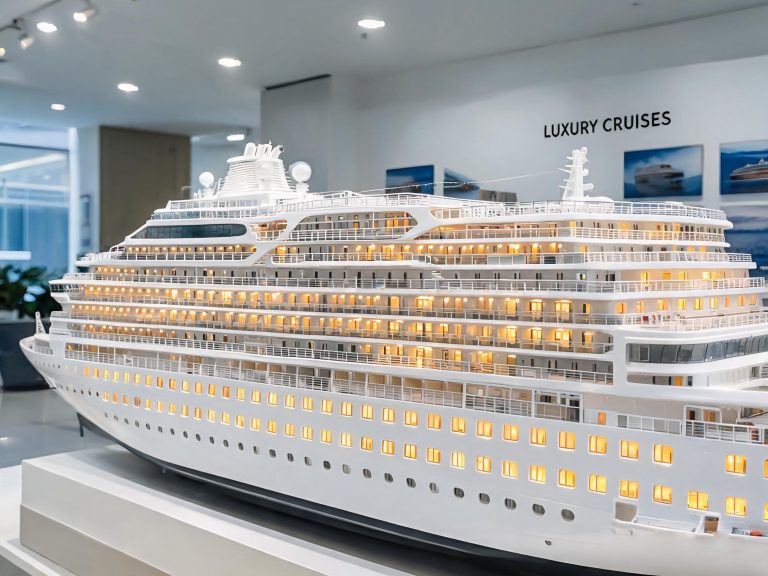
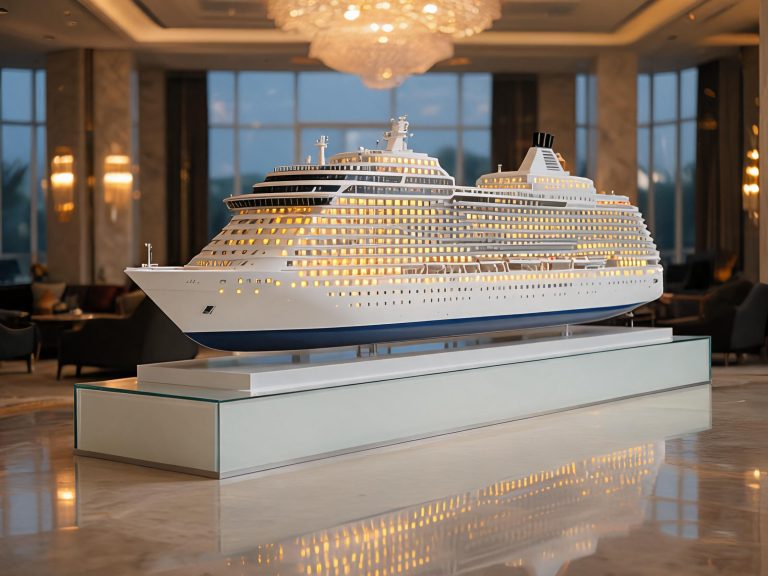
Cruise liners and superyachts are the least forgiving shapes we build. There is no straight run of hull to hide a mistake in. A cruise ship is a stack of 18 decks, 1,400 balcony fronts and a sheer line that has to look right from 3 m away and from across a room.
At 1:200 a 340 m liner measures 1,700 mm. Each balcony recess is 1.5 mm deep and has to catch a shadow, or the whole side reads as a printed decal. At 1:100 a 90 m superyacht measures 900 mm, and every window mullion is a separate piece of brass.
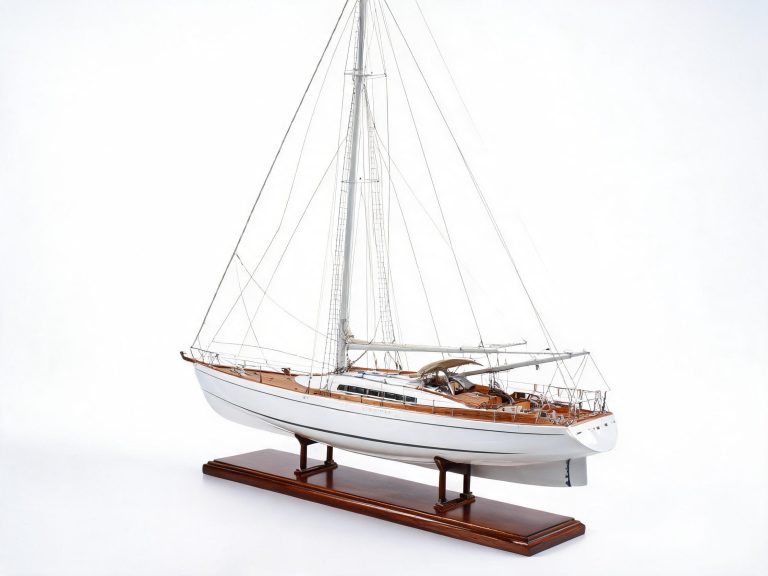
Finish is where yacht models are judged. We spray hulls to 85 to 90 gloss units and superstructures to 40, satin, because a real yacht is not glossy above the deck. Name boards are cut as individual letters at 0.8 mm and set by hand.
These guides cover the practical side: which display case suits a 1,700 mm hull, how much light a dark blue topside needs before it reads black, how to keep dust off a gloss finish, and how to crate a model that weighs 18 kg.
Three articles are published so far, on cruise liner models, yacht models and display cases. More arrive as commissions leave the workshop.
If you are commissioning rather than reading, the custom ship model service page covers scales, lead times and pricing. For a cruise line or hotel group, the usual brief is a fleet of two to six ships at one scale for a sales office or a launch event.