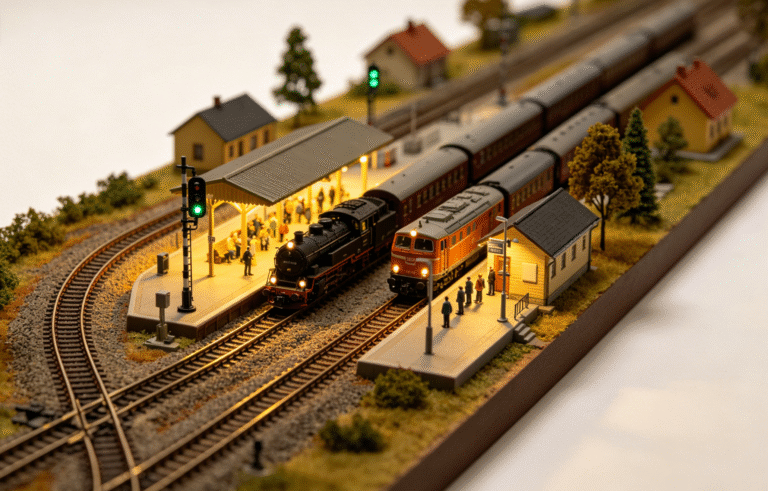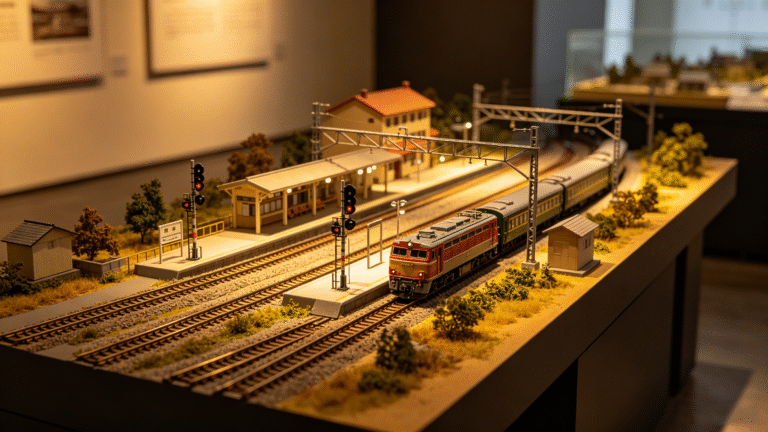
Model Railroad
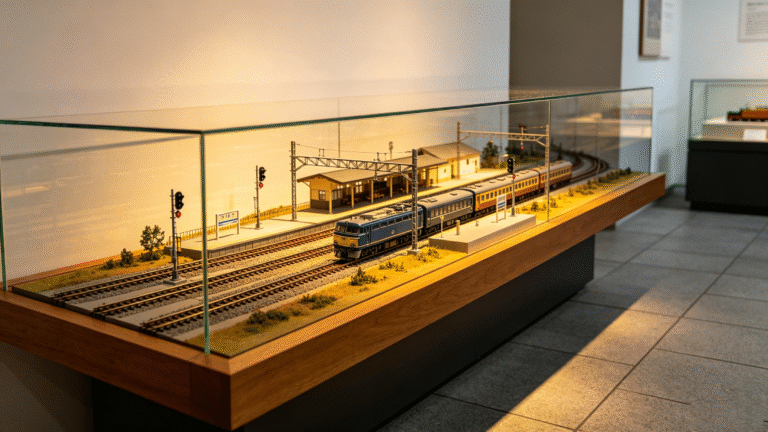
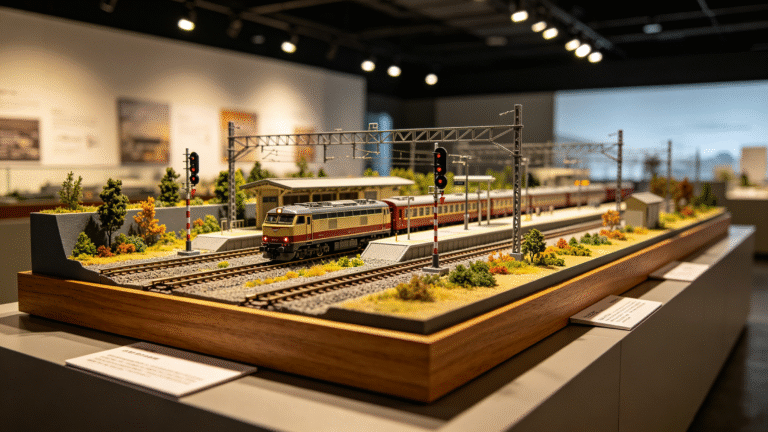
Model railroad layouts and scenery, built on commission. N scale at 1:160, HO at 1:87, and a 1.2 x 2.4 m baseboard as the most common starting size.
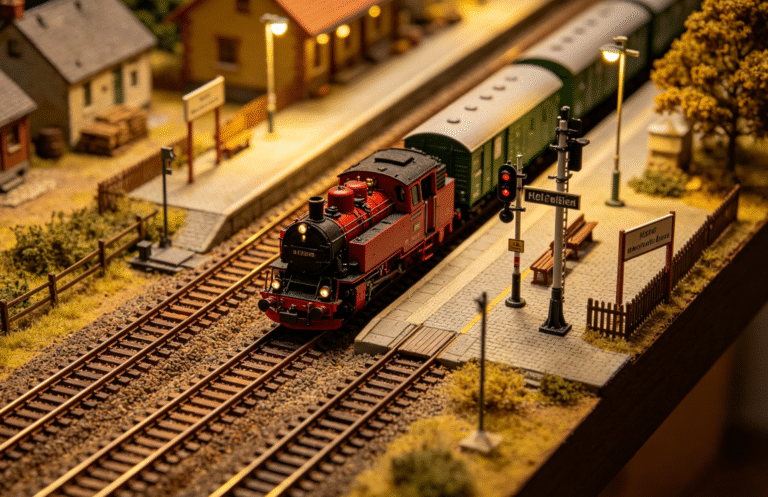
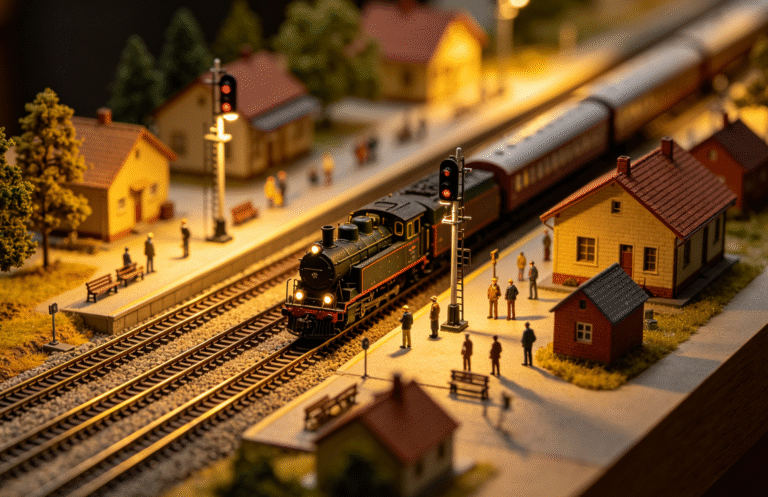
The guides here are practical rather than inspirational. Track planning on a 1.2 x 2.4 m board with 18 turnout positions and a minimum radius that actually runs. Ballast shoulders at 3 mm, rail weathering in three passes, vegetation layered from 12 mm static grass down to ground foam. Water effects for harbours, rivers and wet docks. Texture work on plaster and foam that reads as soil rather than as sandpaper.
Baseboards are 12 mm plywood on a 50 mm foam core, which holds a screw, survives a move, and weighs under 20 kg for a 1.2 x 2.4 m board.
Seven guides are published so far, covering scale selection, track, vegetation, water, texture and materials. More arrive as layouts leave the workshop.
If you are commissioning a layout rather than building one, the first decision is not scale or era. It is what the layout has to prove: a port operation, a yard, a single line through a valley. Everything else follows from that.
Article classification
The latest article
- Realistic Vegetation for Model Railroad SceneryModel Railroad2026-08-10
- Realistic Train Tracks: Tips for Custom LayoutsModel Railroad2026-08-08
- How to Scale Custom Model Railroad Buildings CorrectlyModel Railroad2026-08-06
- Realistic Water Effects for Model Railroad SceneryModel Railroad2026-08-04
- Choosing Materials for Custom Model Railroad ModelsModel Railroad2026-08-02
- Adding Realistic Texture to Model Train SceneryModel Railroad2026-07-29
- Model Railroad Scale Selection: How to ChooseModel Railroad2026-05-07