
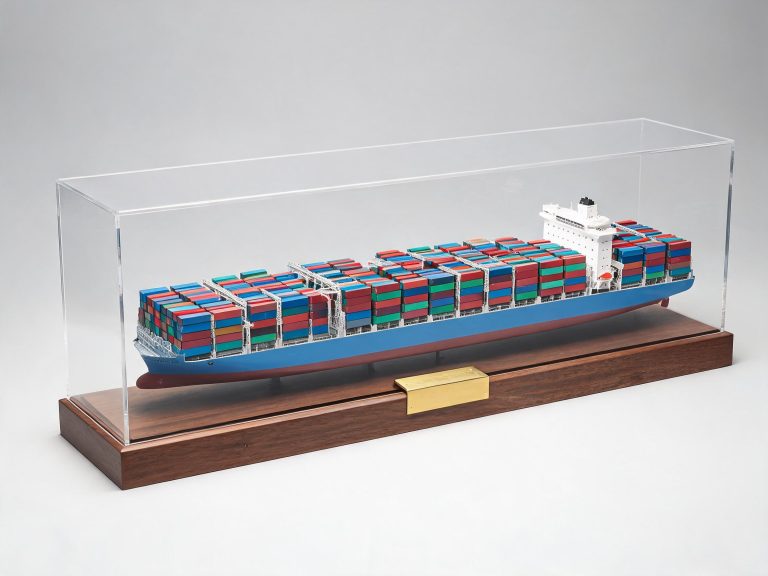
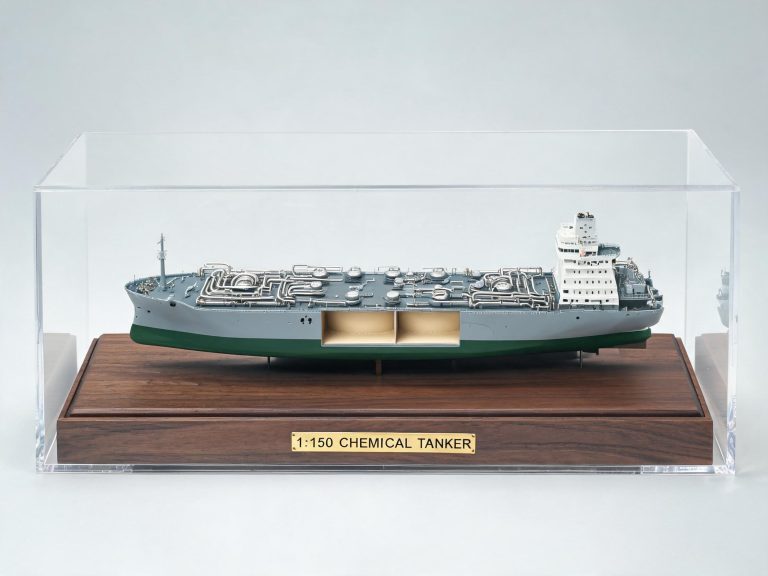
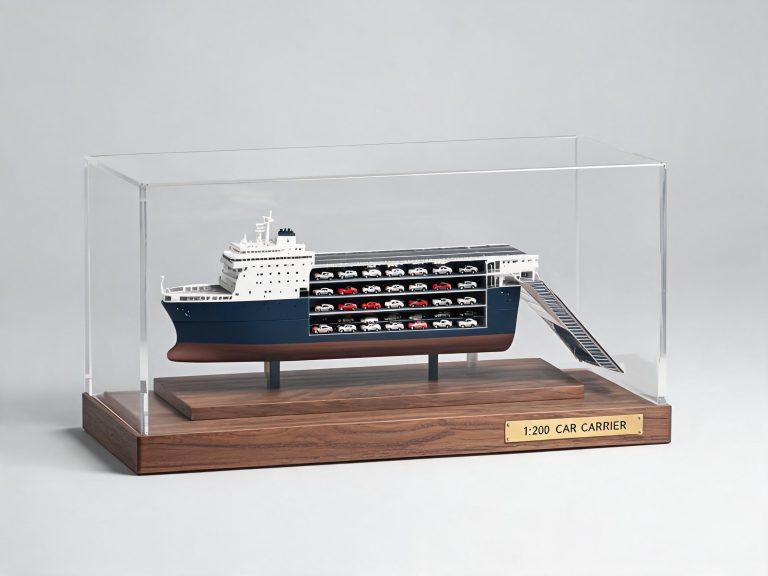
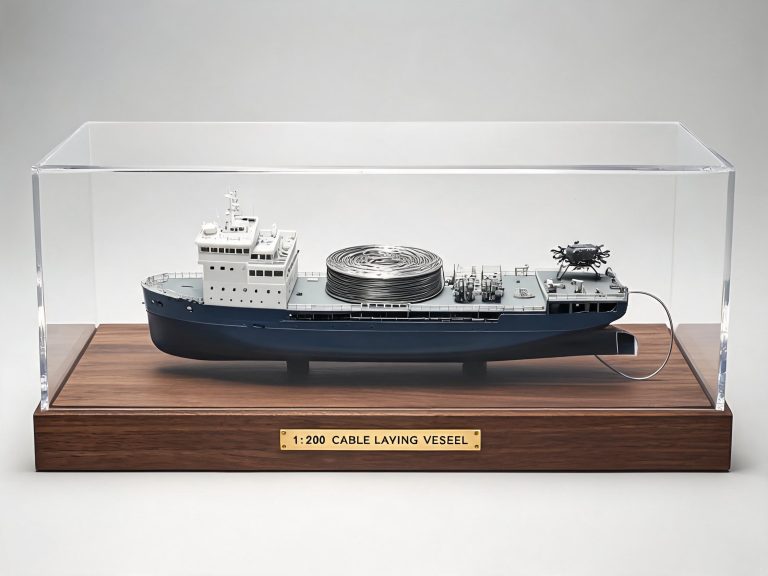
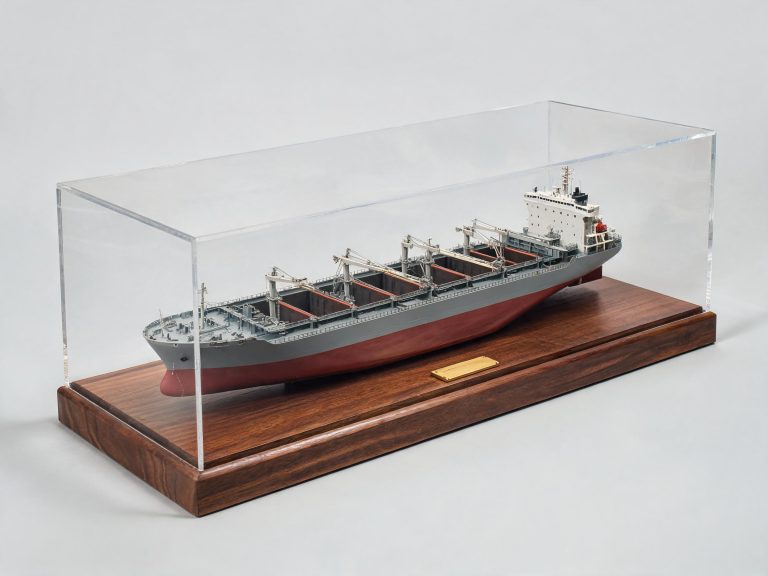
Every display case is sold as protection. The differences show up after two years, when one surface is hazy and the other still reads clean under a downlight.
Here is what actually separates acrylic from glass on a ship model, in numbers.
Two Materials, One Job
Acrylic (PMMA) is a thermoplastic. Glass is mineral. Both keep dust off and both stop hands. Everything else differs.
Light transmission glass 89-91%, acrylic 92%, low-iron glass 91-92%
Density glass 2,500 kg/m3, acrylic 1,190 kg/m3
Hardness glass 5.5 Mohs, acrylic 2-3 Mohs
UV blocking standard glass passes 60-75% of UV, UV-filter acrylic blocks 98% below 380 nm
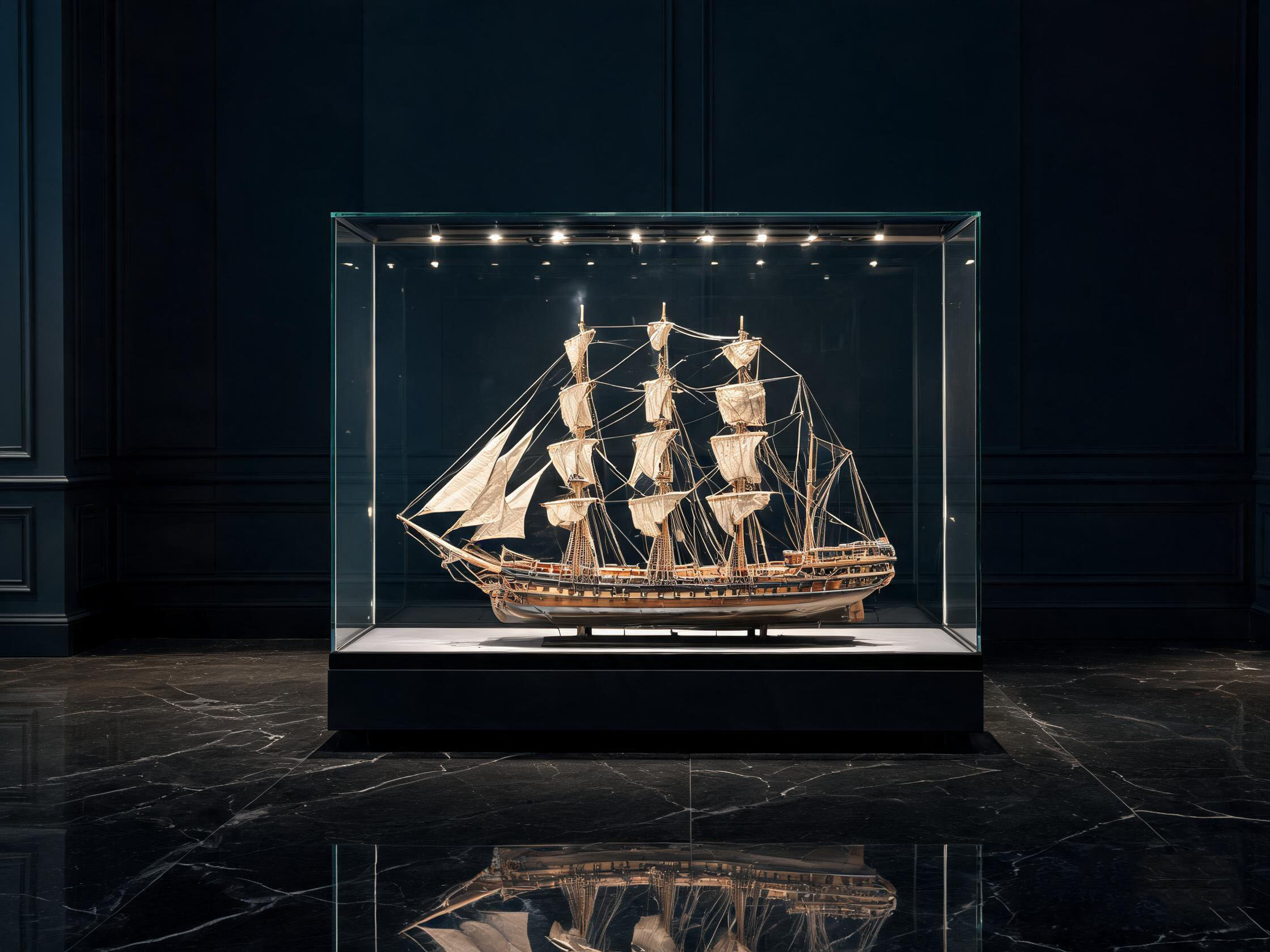
Why UV Matters More Than Clarity
Sunlight fades paint and yellows varnish. A model near a south-facing window can lose 30-40% of its colour saturation in five years without UV protection. Standard glass is not a filter. UV-filtering acrylic is, and laminated glass with a UV film is.
If the model sits in a room without daylight, this matters less. If it faces a window, it is the first decision, not the last.
Weight and Size Limits
Weight decides what your wall or plinth can hold. A 1,200 x 400 x 500 mm case weighs about 38 kg in 12 mm glass and 9 kg in 10 mm acrylic. On a floating shelf, that is the difference between a bracket and a structural fix.
Above 1,500 mm, glass cases usually need a metal frame and a base cabinet. Acrylic holds its shape with 10-12 mm panels and a bonded edge, at a fraction of the load.
Scratch, Static and Cleaning
Acrylic scratches at 2-3 Mohs, which means paper and dry cloth will mark it. Use a microfibre cloth and water, never a dry paper towel. Glass takes normal glass cleaner without complaint.
Acrylic also holds static and pulls dust to the inside face. A grounded frame or an anti-static wipe every 3-4 months solves it. Glass does not have this problem, which is why museums with daily cleaning still specify it.
Which Case Suits a Museum Gallery?
Laminated low-iron glass with a UV film and a sealed gasket. The reason is not clarity. It is that glass survives 20 years of cleaning by staff who are not model makers, and it does not attract dust to the inside surface.
For a boardroom, office lobby or private collection, UV-filter acrylic is usually the better buy: 60-70% of the glass price, one third of the weight, and no frame needed.
What the Case Adds to the Build
A 1,200 mm acrylic case with a hardwood base runs USD 600-1,800. The same size in framed glass runs USD 1,200-3,500, and laminated low-iron with UV film sits at the top of that range.
Budget 8-15% of the model price for the case. Skipping it is the most common false economy we see, because a dusty model loses detail contrast faster than it loses parts.

Sealing, Venting and Silica
A sealed case is a humidity chamber, whether you plan for it or not. Wood and paint release moisture for the first 12-18 months, and a tight case holds it.
Two options. Seal the case fully, add 30-50 g of silica gel per cubic metre, and refresh it every 6 months. Or vent the case with 2 mm gaps at the base and accept a slower exchange with the room.
For a museum at 45-55% relative humidity, seal and buffer. For an office that swings between 30% and 70% with the seasons, vent and accept. A sealed case in an uncontrolled room traps the worst week of the year inside the glass.
Case Height and the Viewing Angle
Allow 40-60 mm above the tallest mast or crane. Below 40 mm, a viewer standing at 1.5 m cannot see the top of the rigging without crouching, and the case starts to look like a box rather than a window.
The base plinth adds 60-120 mm. A 700 mm model in a 120 mm plinth case puts the waterline at 1,150-1,250 mm from the floor, which is eye level for a standing adult. That number, not the case material, decides whether the display feels right.
Frequently Asked Questions
Does acrylic yellow over time?
Cheap extruded acrylic can yellow in 5-8 years under direct sun. Cast acrylic with a UV stabiliser holds 15-20 years. Ask which one is being quoted; the price difference is about 25%.
Can I add a case to a model I already own?
Yes, if we have the base dimensions and the model height. A retrofitted case adds 3-4 weeks, because the base usually needs a rebate cut for the panel.
Is glass safe for shipping?
It ships, but it needs a crate with 30 mm foam and a vertical orientation. Acrylic is the lower-risk option for air freight, which is why most of our export models use it.
Do I need a sealed case?
For a museum, yes: a gasket and a silica pack hold humidity at plus or minus 5%. For an office, a closed case with 2 mm clearance is enough. Our museum grade ship model page covers the sealed specification.
If you are choosing between the two for a specific room, send the dimensions and the window direction. The illuminated cruise ship case shows a lit acrylic build, the wooden tall ship model page shows a glass-fronted cabinet, and the custom ship model service quotes both in one line. Questions go to the contact page.