
What Is a Custom Model Railroad Industrial Scene?
It is a factory or mill scene made for you.
A custom model railroad industrial scene includes buildings, tracks, and details.
You choose the industry type (steel, coal, oil, grain).
The scene is weathered and fully operational.
Your trains will deliver and collect freight.
Why Commission an Industrial Scene?
Building industry yourself takes months of work.
A custom model railroad industrial scene saves you time and effort.
You get professional weathering and detailing.
Perfect for the focal point of a switching layout.
Your layout gains a realistic working environment.
How the Commission Service Works
First, discuss your industry type with the builder.
Tell them your scale (HO, N, O) and space size.
Share photos of real factories you like.
They create a design sketch for approval.
Then construction of buildings and scenery begins.
What You Receive
A complete industrial scene on a base.
A custom model railroad industrial scene includes multiple buildings.
Track spurs, loading docks, and yard lights.
Figures, vehicles, and weathering are added.
Ready to place on your layout.
Pricing and Timeline
Small industries (one building) cost 300‑600.Mediumcomplexes(2‑3buildings)cost300‑600.Mediumcomplexes(2‑3buildings)cost700‑1500.
Large steel mills (4+ buildings) cost $2000‑5000.
Turnaround is 6‑16 weeks.
Shipping is crated and insured.
Model Railway Tunnel Custom Service
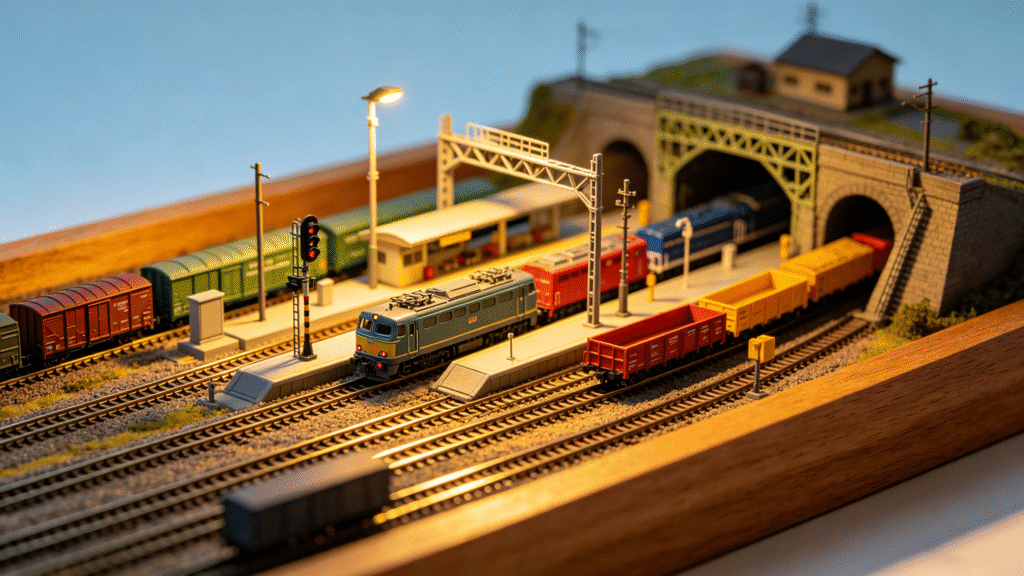
Add a tunnel leading to the industry.
Use Model Railway Tunnel Custom Service once.
Trains emerge from a mountain.
Then they enter your industrial scene.
N Scale Model Railroad Layout Customization Service
N scale industry needs fine detail.
Use N Scale Model Railroad Layout Customization Service once.
Tiny pipes and miniature cranes.
Perfect for small space industrial scenes.
Model Railroad Landscape Custom Order Service
Landscape around the industry is dirty.
Use Model Railroad Landscape Custom Order Service once.
Gravel yards, weeds, and oil stains.
Your factory sits in a realistic environment.
Model Railroad Bridge Custom Design Service
A bridge can lead to the industry.
Use Model Railroad Bridge Custom Design Service once.
A rusty truss over a creek.
Trains cross before entering the plant.
Model Railway Scenery Kit Custom Made Service
Order a kit to build yourself.
Use Model Railway Scenery Kit Custom Made Service once.
Pre‑cut parts and castings.
You assemble the industrial scene at home.
Choosing an Industrial Scene Builder
Look at portfolios of past industrial work.
Read reviews from other modelers.
Ask about materials (resin, wood, styrene).
Check if they weather realistically with rust and grime.
Get a written contract with timeline.
Questions to Ask
What is your turnaround time?
Can you add working lights or smoke?
Do you include track and wiring?
What happens if the scene is damaged in shipping?
Do you offer design revisions?
What to Provide the Builder
Scale and footprint dimensions.
Industry type (steel mill, grain elevator, oil refinery).
Number of tracks and spurs needed.
Photos of real industry you like.
Era (steam, diesel, modern).
The Design Phase
The builder creates a layout sketch.
You approve building placement and track routing.
Changes are easiest at this stage.
Expect 2‑3 rounds of revisions.
Then construction begins.
Materials Used
Buildings from resin, laser‑cut wood, or styrene.
Track from code 70 or 83.
Ground cover from fine ballast and soil.
Weathering from chalks and washes.
LED lights for yard poles and building interiors.
Building the Industry
Main factory with loading bays.
Storage tanks, pipes, and conveyor belts.
A coal tipple or grain elevator.
Office building for the foreman.
All structures are weathered with rust and grime.
Track and Operations
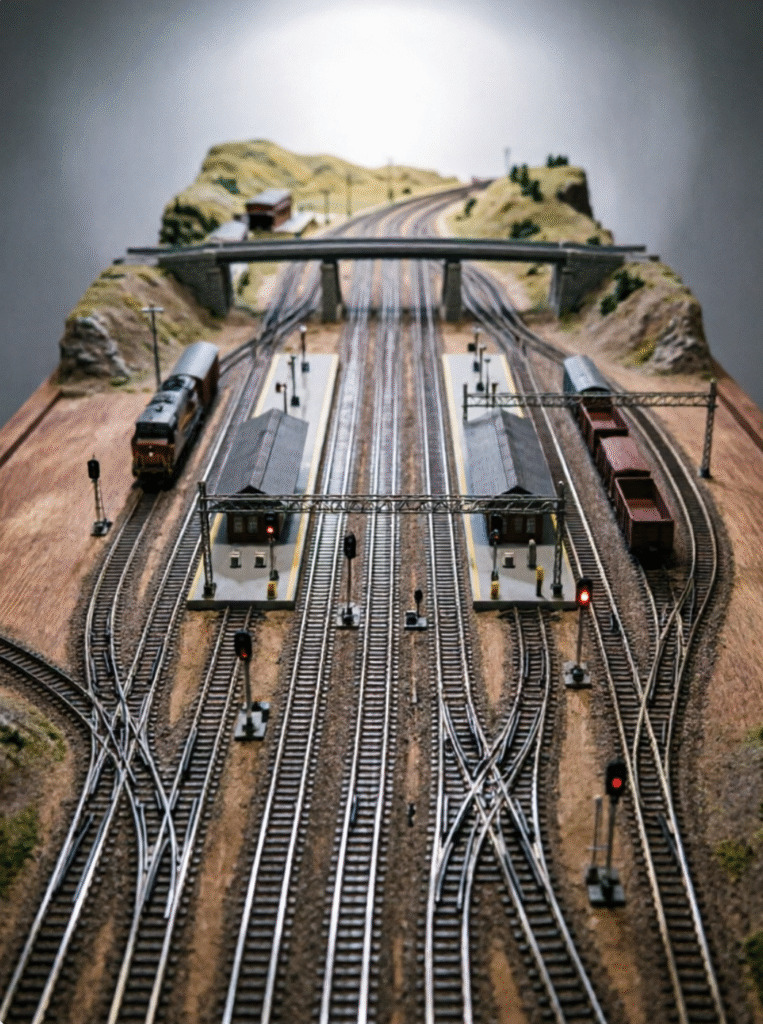
Spurs reach every loading dock.
A runaround track for switching.
Clearances for long cars.
Uncoupling magnets or tools.
Your industry is ready for operating sessions.
Detailing the Industrial Scene
Piles of scrap metal or coal.
Oil drums and pallets.
Forklifts and hand trucks.
Workers in hard hats.
A foreman’s shack with a sign.
Weathering for Realism
Rust streaks on roofs and walls.
Oil stains on the pavement.
Dirt around the track area.
Smoke stains near exhaust pipes.
Your industry will look years old.
Lighting the Scene
Yard lights on tall poles.
Interior glow from factory windows.
Arc welding flicker effects.
A lit sign with the company name.
Your scene looks dramatic at night.
Backdrops and Blending
A painted or photo backdrop of distant industry.
Smoke plumes on the horizon.
The scene blends into your layout.
Extra trees or fences hide edges.
Your industry feels like part of a city.
Shipping Your Industrial Scene
The builder uses a wood crate and foam.
Fragile pipes and railings are protected.
Insure for full replacement value.
Open and inspect immediately.
Report damage within 48 hours.
Installing the Scene
Place the scene on your benchwork.
Connect track at both ends.
Solder feeders to the bus wires.
Blend edges with ground cover.
Test run a switcher through every spur.
Operating Your Industrial Scene
Run a local freight with covered hoppers.
Spot cars at loading docks.
Pull loaded cars to the mainline.
Deliver raw materials.
Your scene provides hours of switching fun.
Common Mistakes to Avoid
Not enough clearance for long cars.
Forgetting a runaround track.
Buildings too clean and new.
No workers or vehicles.
Skipping the weathering.
Final Tips
Start with one industry building.
Add track and one spur first.
Then expand to a complex.
Study real industrial sites.
Your scene will be the layout’s workhorse.
Now commission your custom model railroad industrial scene today.
Include a tunnel service, N scale layout, landscape order, bridge design, and scenery kit service.
Let professionals build your gritty workplace.
Happy modeling.