Tips for Scaling Custom Model Railroad Building Model Correctly
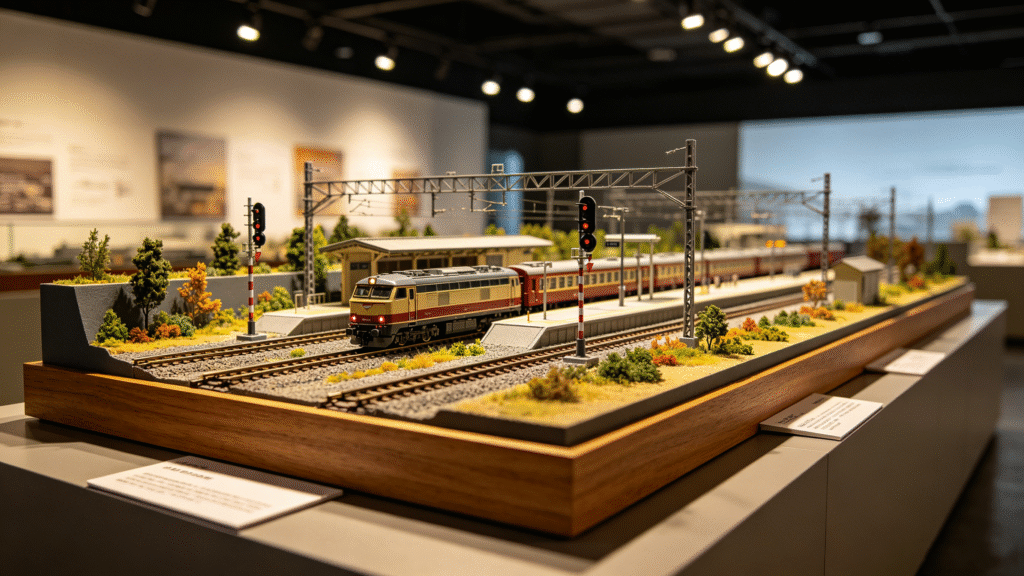
Useful Tips for Scaling Custom Model Railroad Building Model Correctly
Confirm standard scale standards before starting production.
Why Correct Scale Matters
Wrong scale breaks the realism.
Scaling custom model railroad building model correctly starts with understanding proportions.
A HO building on an N layout looks absurd.
Your trains and structures must match.
Scale creates a believable world.
Know Your Layout Scale
HO is 1:87, N is 1:160, O is 1:48.
Check your track and rolling stock.
Scaling custom model railroad building model correctly requires knowing your numbers.
Write the scale on a note card.
Keep it near your workbench.
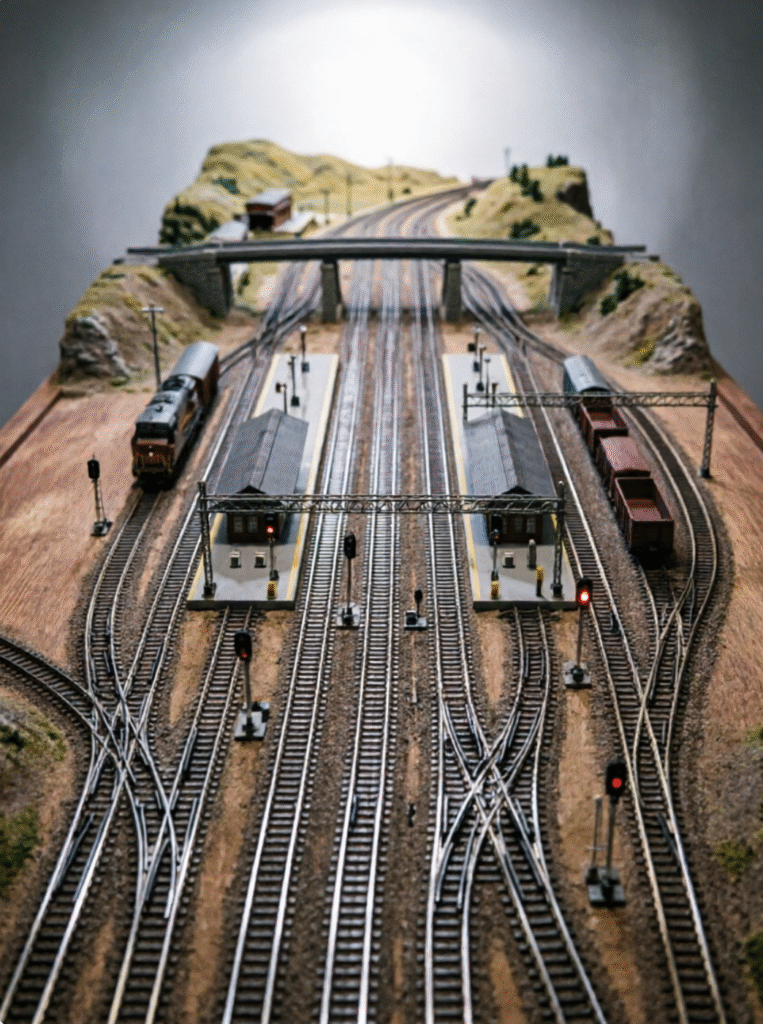
Mark every part size clearly on your drawing.
This rule fits Custom Model Railway Building Model perfectly.
Choose matched scale tools for precise size marking.
Use fine rulers to avoid big size errors in making.
Keep wall thickness unified in all building parts.
Uneven thickness will affect overall visual effect.
Control window and door size in proper proportion range.
They match main building style naturally and smoothly.
Follow rules to make nice Custom Model Train Scenery Model.
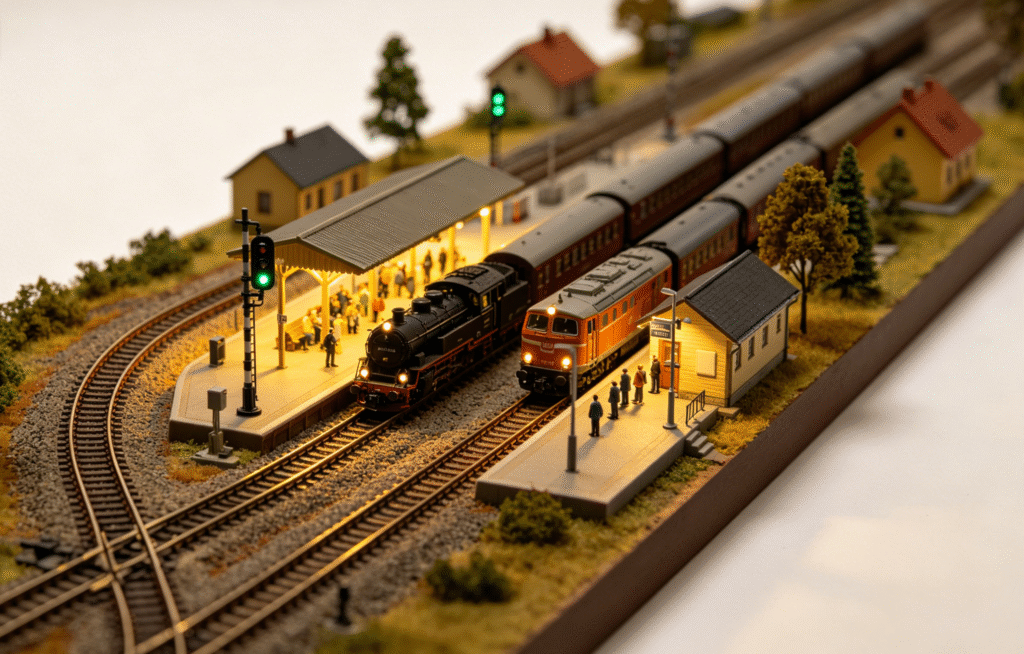
Adjust height ratio according to scene overall layout.
Tall and short buildings need reasonable space arrangement.
Reserve proper gap between adjacent small buildings.
Leave space for later track and road layout design.
Stable scaling protects complete Custom Model Railroad Model.
Check size contrast repeatedly after preliminary making.
Fix uncoordinated parts in time without delay.
Refer to finished works to correct wrong size design.
Learn mature layout ideas to upgrade your own works.
Reasonable scaling optimizes whole Model Railroad Scenery Model.
Avoid random size change during model production work.
Random adjustment will break unified scene atmosphere.
Match building scale with train body size strictly.
Ensure trains can pass smoothly beside buildings.
Stick to fixed ratio to finish Custom Model Train Scenery Model.
Store scale data well for later repeated production use.
Save time and improve making efficiency greatly.
Accurate scaling makes your mini scene more realistic.
All beginners can learn these simple tips quickly.
Use a Scale Ruler
Buy a scale ruler for your gauge.
It has markings for HO, N, and O.
Scaling custom model railroad building model correctly is easy with the right tool.
Measure real buildings in feet.
Convert using the ruler’s markings.
Convert Real Measurements
A real door is 7 feet tall.
In HO scale, that is about 1 inch.
Scaling custom model railroad building model correctly uses simple math.
Divide real inches by 87 for HO.
Divide by 160 for N scale.
Measure Existing Buildings
Look at buildings already on your layout.
Measure their door and window sizes.
Scaling custom model railroad building model correctly matches these dimensions.
Copy the proportions of successful structures.
Your new building will fit right in.
Check Door Heights
Doors are the best scale reference.
Most model doors are 1 inch in HO.
Scaling custom model railroad building model correctly uses doors as a guide.
N scale doors are about 0.5 inches.
Adjust your building accordingly.
Window Size Consistency
Real windows are about 3 feet wide.
HO windows are roughly 0.4 inches.
Scaling custom model railroad building model correctly keeps windows uniform.
Use a template or printed grid.
Cut all window openings the same.
Roof Height Proportions
A single story is about 10 feet tall.
Two stories are about 20 feet.
Scaling custom model railroad building model correctly respects floor heights.
HO scale: 1.4 inches per story.
N scale: 0.75 inches per story.
Chimney and Roof Details
Chimneys should be in scale too.
A real chimney is about 2 feet wide.
Scaling custom model railroad building model correctly includes all details.
HO chimneys: 0.25 inches square.
N chimneys: 0.15 inches square.
Platform and Loading Dock Height
Freight docks are about 3.5 feet high.
That matches railcar floor height.
Scaling custom model railroad building model correctly aligns docks with tracks.
HO dock height: 0.5 inches.
N dock height: 0.25 inches.
Using Blueprints
Find HO scale blueprints online.
Many are free for modelers.
Scaling custom model railroad building model correctly starts with a plan.
Print the blueprint at 100%.
Cut and glue to foam or wood.
Print Your Own Grid
Print a 1‑inch grid on paper.
Use it as a cutting guide.
Scaling custom model railroad building model correctly needs accurate cuts.
Each square represents one HO foot.
Adjust printer scaling for N or O.
Enlarging or Reducing Kits
Some kits can be resized.
Use a photocopier at the right percentage.
Scaling custom model railroad building model correctly uses the copier.
HO to N is 54% reduction.
N to HO is 185% enlargement.
Test Fit Before Building
Cut cardboard mockups first.
Place them on your layout.
Scaling custom model railroad building model correctly needs visual testing.
Step back and look from all angles.
Adjust size before cutting final materials.
Compare to Rolling Stock
Place a boxcar next to your building.
The door height should match.
Scaling custom model railroad building model correctly checks against trains.
If the boxcar is taller, your building is too small.
Adjust accordingly.
Use a Scale Calculator App
Many free apps do scale math.
Enter real feet, get model inches.
Scaling custom model railroad building model correctly is easier with technology.
Save the results for reference.
No more manual division errors.
Avoid Common Errors
Mixing scales on one layout is bad.
Using metric and imperial inconsistently.
Scaling custom model railroad building model correctly avoids these mistakes.
Always double‑check your math.
Measure twice, cut once.
Consider Forced Perspective
Smaller buildings in the background.
Slightly larger ones in the foreground.
Scaling custom model railroad building model correctly can use this trick.
Reduce background buildings by 10‑20%.
It creates an illusion of depth.
Scaling Industrial Buildings
Factories are often larger than houses.
But proportions must still match.
Scaling custom model railroad building model correctly for industry uses larger footprints.
A 50‑foot factory is 7 inches in HO.
Keep doors and windows in scale.
Scaling Farm Buildings
Barns are taller than houses.
But door heights stay the same.
Scaling custom model railroad building model correctly on farms respects human entry.
A barn door is still 7 feet tall.
Other dimensions can be larger.
Scaling City Buildings
Skyscrapers are very tall.
But ground floor doors are standard.
Scaling custom model railroad building model correctly for cities works with layers.
Build in modules of 10‑foot stories.
Stack them to desired height.
Use Reference Photos
Take photos of your layout.
Print them with a scale ruler visible.
Scaling custom model railroad building model correctly uses visual references.
Compare your new building to the photo.
Adjust proportions before final build.
Ask for a Second Opinion
Another modeler may spot errors.
Show them your mockup on the layout.
Scaling custom model railroad building model correctly benefits from fresh eyes.
They might notice a door that is too tall.
Make corrections before painting.
Custom Model Train Scenery Model
Scenery elements must also scale.
Use Custom Model Train Scenery Model once.
Trees should be in proportion to buildings.
A HO tree is about 4‑6 inches tall.
Custom Model Railroad Model
Your whole layout needs consistent scale.
Use Custom Model Railroad Model once.
Check every new piece against the same standard.
Keep a scale card on your workbench.
Custom Model Railway Building Model
This is your main project.
Use Custom Model Railway Building Model once.
Apply all the scaling tips above.
Your building will fit perfectly.
Model Railroad Scenery Model
Scenery models include landforms.
Use Model Railroad Scenery Model once.
Hills and rocks should not dwarf buildings.
Keep natural features in scale too.
Custom Model Train Scenery Model
(Second occurrence as listed)
Use Custom Model Train Scenery Model once more.
Train scenery includes trackside details.
Signals, signs, and fences need correct sizing.
Final Scaling Tips
Start with a simple building first.
Practice scaling on a small shed.
Keep a notebook of common conversions.
When in doubt, compare to a boxcar.
Your layout will look professionally scaled.
Now master scaling custom model railroad building model correctly with these tips.
Include train scenery, railroad model, railway building, and scenery model.
Build with confidence and precision.
Happy modeling.