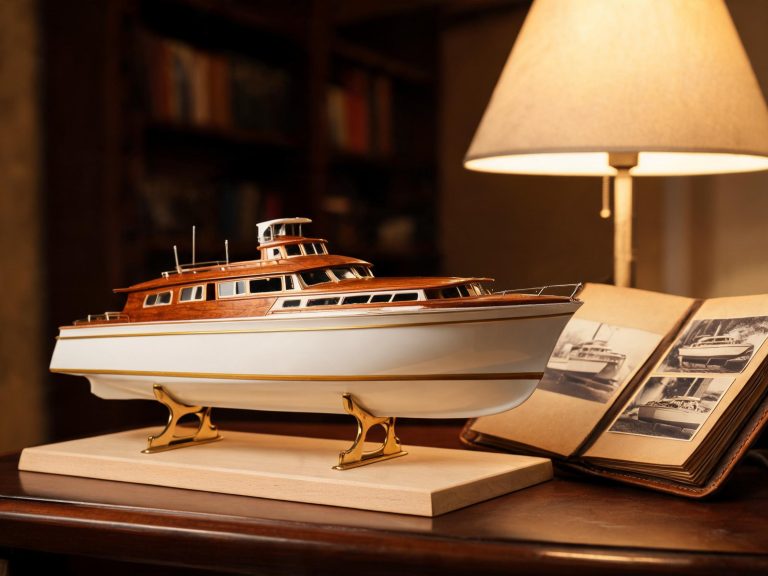
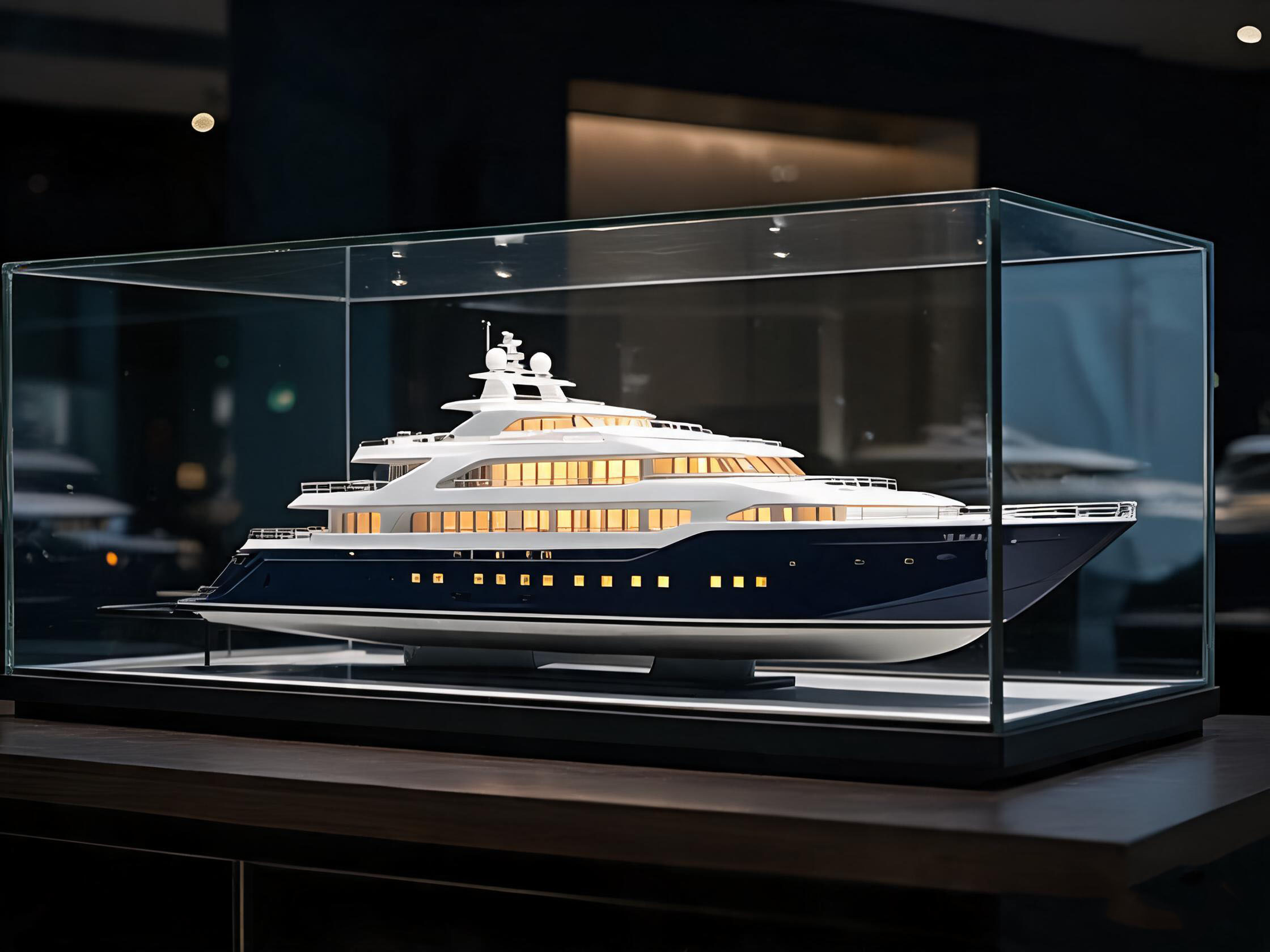
A custom yacht model is built to your vessel, not picked from a catalogue. We work from photographs, a lines plan, or the drawings left over from a refit. Lengths run from a 300 mm desk model to a 2,000 mm display piece.
What We Work From
Three inputs cover almost every commission.
- Lines plan or naval architecture file. The cleanest route. Hull shape, sheer line and superstructure come straight from the designer.
- Build photographs. Useful for deck layout, rail heights and the small things drawings leave out.
- Refit drawings. Older yachts rarely have a clean file. We reconstruct from survey drawings and sister vessels.
If photographs are all you have, we say so up front and list every assumption in the dossier. You approve the 3D before any timber is cut.
Scales and What They Mean
A 30 m motor yacht at 1:25 is 1.2 m long. At 1:50 it is 600 mm, which fits a shelf. The scale decides how much deck detail survives: cleats, winches and window frames all shrink, and at 1:100 they have to be simplified.
- 1:100 Desk and shelf. Strong silhouette, simple fittings.
- 1:50 The usual choice for brokerage and owner gifts. Deck detail reads clearly.
- 1:25 Display and lobby. Railings, teak decking and interior hints.
- 1:12 Half-hull and section models, wall mounted.
Materials and Finish
Hulls are carved from jelutong or basswood, or moulded in GRP for models over 1,500 mm. Decks use teak veneer with visible plank lines. Fittings are brass and stainless, with printed resin only where a shape cannot be machined. Windows are acrylic, set into the superstructure, not painted on.
Finish is two-pack clear over stain, or a colour match to your hull paint. We ask for the paint code. If there is not one, we match from a photograph taken in daylight and send a sample board before the final coat.
The Display Case
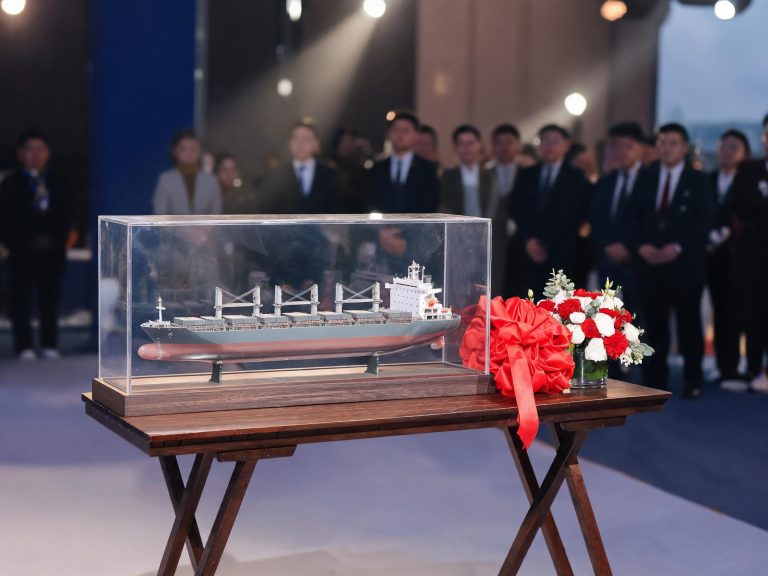
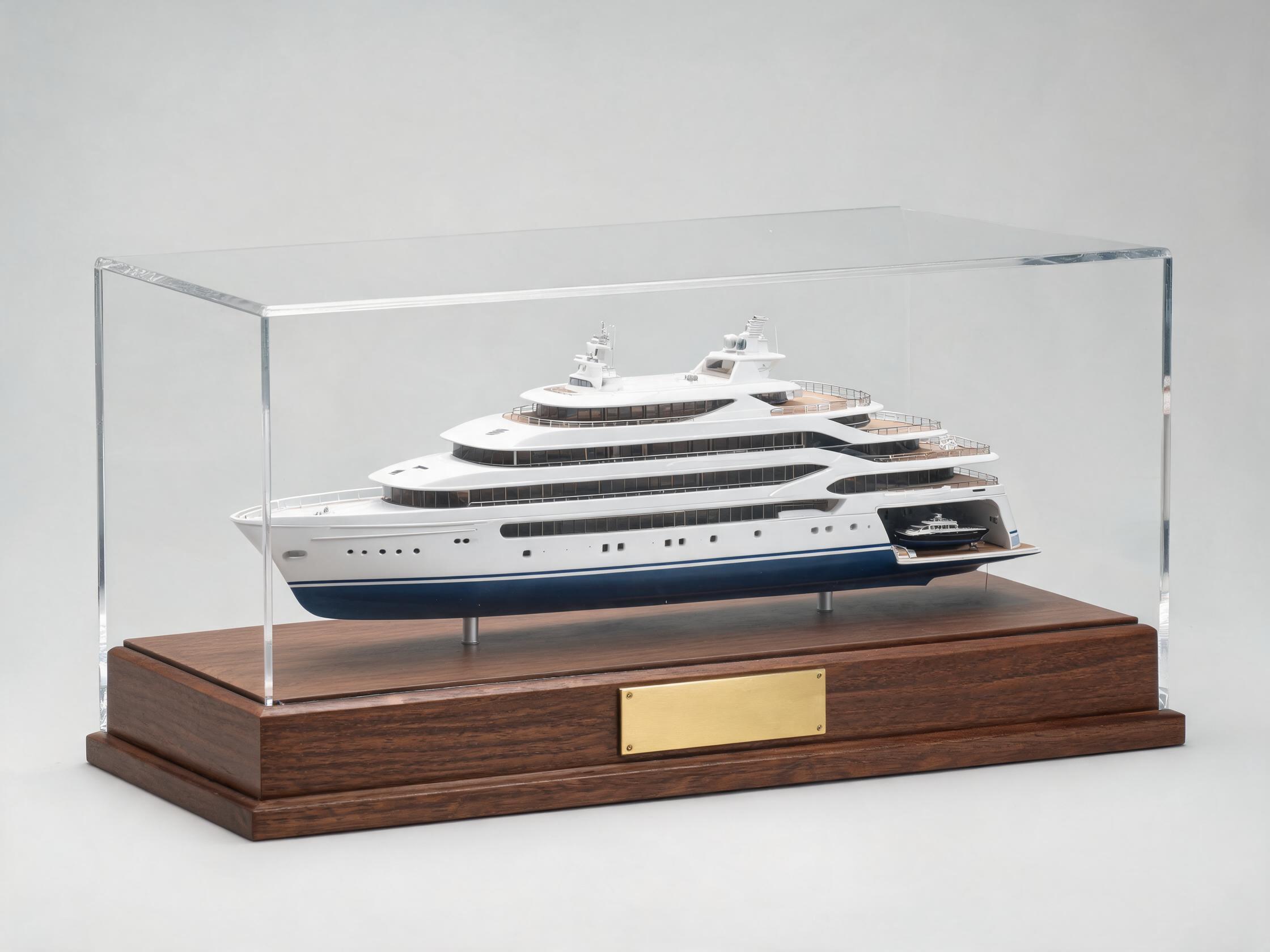
Acrylic or glass, with UV filtering, on a wooden plinth. The case is built after the model is finished, so the fit is measured rather than estimated. LED lighting is optional and sits in the plinth, out of sight.
How the Build Runs
Four stages, in order.
- Drawings and 3D. You approve the shape before anything is cut.
- Hull. Carved or moulded, primed, then checked against the plan.
- Deck and fittings. The slow part. Rails, winches, windows, tender.
- Case, crate, dispatch. Fitted, photographed, packed.
Photographs every week, and a video call at the hull, deck and case stages if you want one. Nothing is hidden behind a finished-photo portfolio.
What a Yacht Model Costs by Length
These bands come from delivered work, not a price list. Lengths are the model’s overall length. Scales shown are for a 30 m yacht.
| Model length | Scale on a 30 m yacht | Delivered price (USD) |
|---|---|---|
| 300 mm | 1:100 | 1,300 – 1,700 |
| 400 mm | 1:75 | 1,900 – 2,400 |
| 500 mm | 1:60 | 2,700 – 3,300 |
| 600 mm | 1:50 | 3,400 – 4,200 |
| 800 mm | 1:37 | 5,000 – 6,000 |
| 1,000 mm | 1:30 | 6,800 – 7,600 |
| 1,200 mm | 1:25 | 9,000 (reference build) |
| 1,500 mm | 1:20 | 12,500 – 14,500 |
| 2,000 mm | 1:15 | 19,000 – 24,000 |
Case and crate are inside those numbers. Air freight is not. A larger case, LED lighting, interior hints or a second hull in another livery push the figure up, and we itemise that before you commit. Quotes hold for 30 days.
Price
We do not publish a range for yacht models, because the number moves with three things: target length, deck detail and case specification. Give us those and you get a fixed price, not a range, within three working days.
Two costs are easy to underestimate and we price them separately so you can see them: the display case, and the crate. Both are quoted before you commit.
Lead Time and Shipping
45 days, counted from 3D approval and deposit. Shipping is by air freight from Shenzhen, or door delivery with the case already fitted. The model travels bolted to a plywood base inside a foam-lined crate, in three layers.
Where These Models Go
Marina lounges, brokerage offices, owner studies and yard reception areas. A restored classic yacht is a common commission; one recent build is written up in the restoration case study. For larger display pieces, see the museum grade range.
Frequently Asked Questions
Can you build a yacht model from photographs only?
Yes. Expect a longer drawing stage. Photographs rarely give hull lines, so we reconstruct from sister vessels and mark every assumption in the dossier.
What is the smallest yacht model you build?
300 mm overall length. Below that, railings and window frames stop reading as separate parts.
Do you make half-hull models?
Yes. Half-hull and section models in the 1:12 range, usually wall mounted in a shallow frame.
How much does a 1:25 yacht model weigh?
A 1.2 m model runs 6 to 9 kg with the case. The crate adds roughly 8 kg and is built around the case, not the model.
Can you match the hull colour exactly?
Yes, from the paint code. Without a code we match from daylight photographs and send a sample board before the final coat.
Do you sign the model?
Yes. A small maker’s plate with the vessel name, scale and build year goes on the plinth. The wording is yours to approve.