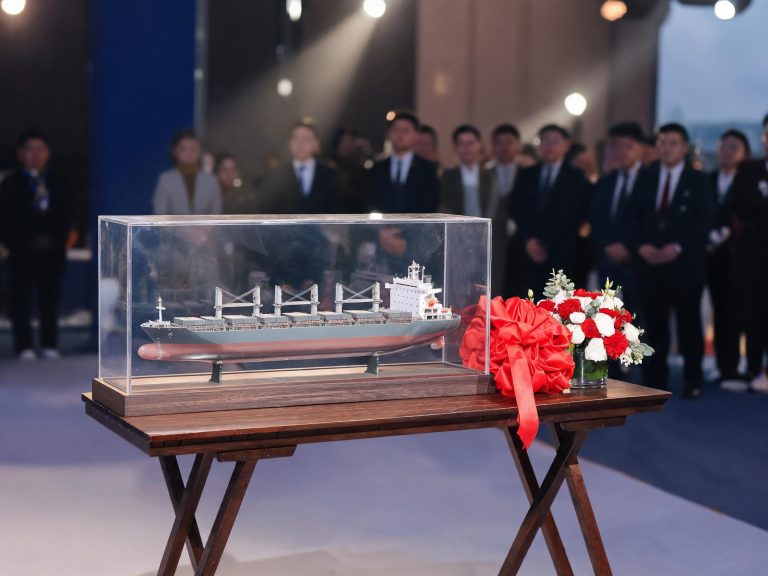
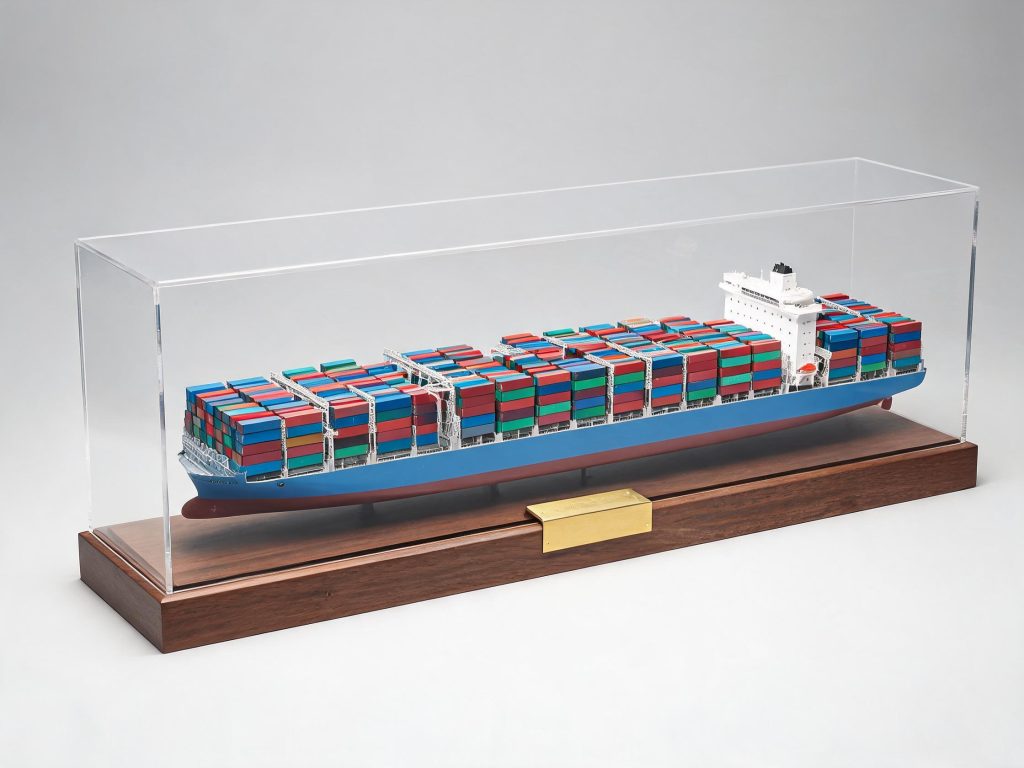
Container ships are counted, not admired. Nine bays, twenty rows, eighteen tiers, and a model that gets the count wrong will be noticed in the first minute.
We build a container ship model from the bay plan. That is the only document that settles how many boxes belong where.
Bay, Row and Tier in Three Dimensions
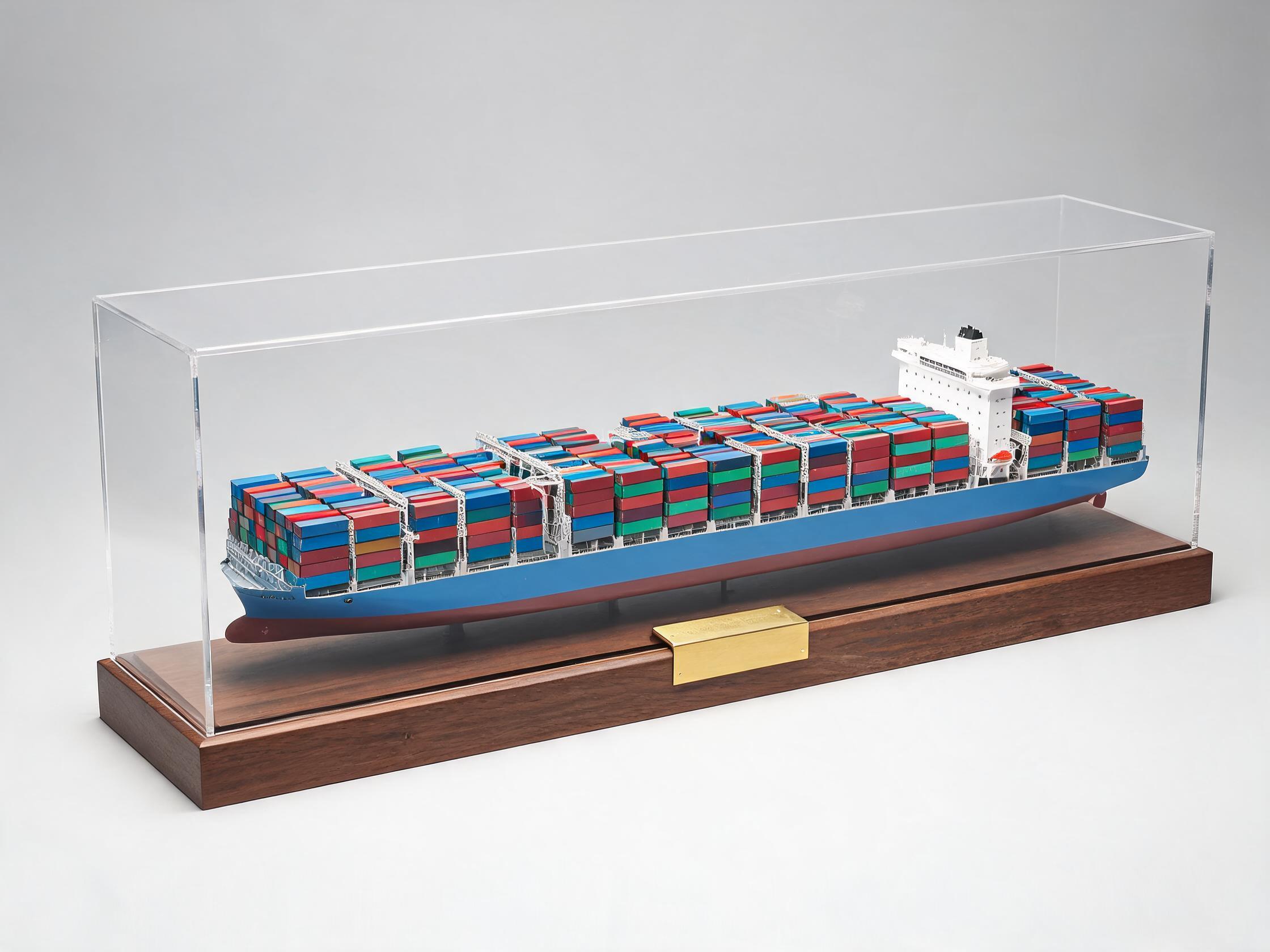
Bay plans are grids. A model turns them into depth, and depth is what shows a charterer whether a stow is realistic.
Stacking that reads as stacking
At 1:100 a forty-foot box is 122 mm. Tiers of six read clearly; tiers of nine start to crowd the lashing detail. We model lashed stacks with the rod bridges visible on the outer row only.
Empty versus loaded
Where a client wants to show a part-loaded ship, empty slots are left open with the lashing bridge in place. It reads instantly, and needs no legend.
Reefer plugs and deck sockets
On reefer-heavy services we add plug rows along the deck edge. Small, but the reefer engineer looks there first.
Why 1:100 for Liner Work
- A 400 m ultra-large container vessel runs 4000 mm at 1:100, usually built in three sections.
- A 200 m feeder runs 2000 mm, comfortable for a liner office.
- 1:200 halves the size but loses lashing detail almost entirely.
If the model must stay under 2000 mm, order 1:150 and accept simplified lashing. Liner clients usually regret going below 1:150.
Build Sequence
- Send the bay plan, GA plan and lashing plan.
- Get a fixed quote in one working day, including container count.
- Approve stacking pattern, colours and lashing extent in 3D.
- Build in 30 to 45 days. Containers are moulded in batches, then placed by bay.
Containers are cast resin, not printed, so the corrugation survives handling. Each stack is removable and numbered by bay for reassembly.
Questions from Liner Operators
Can you match a specific service rotation?
Yes, if you send the stow plan for that voyage. We place boxes according to the plan and mark the discharge ports on a small legend at the base.
How do you keep 2000 containers from looking like texture?
By varying tone within a narrow range and keeping the outer row crisp. We also leave two or three bays partially open, which gives the eye something to resolve.
Is the model stable in a lobby?
Yes. The base is a single plate with a steel spine. Sections over 1300 mm get internal aluminium angle, which keeps the hull straight over years of display.
Our container ship case study shows a completed build, and the custom ship model service covers the wider commercial fleet.
Send your bay plan through the contact page and a fixed quote follows in one working day.
Wondering what a model like this costs? See prices by model length, from 300 mm to 2,000 mm, with the cover and crate included.