



What Is a Bespoke Model Railway Village?
It is a village made for your layout.
A bespoke model railway village fits your exact space and era.
You choose the architecture, colors, and road layout.
Every building is unique and handcrafted.
The result is a warm, inviting scene.
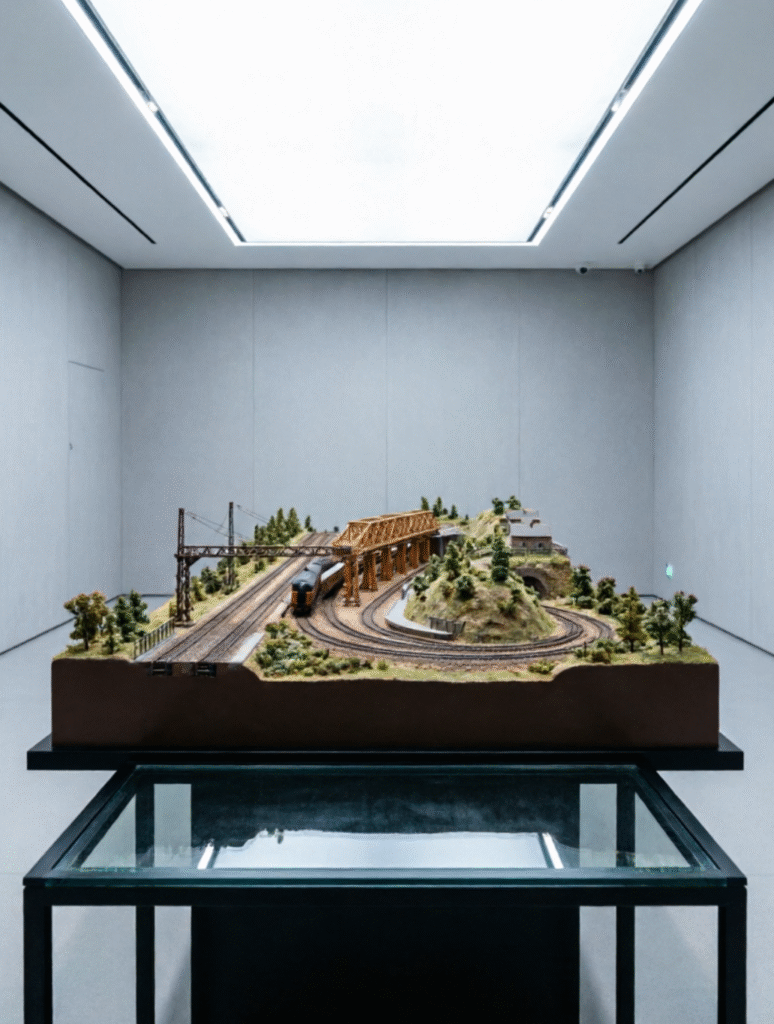
Why Order a Custom Village?
Ready‑made villages look generic and mass‑produced.
A bespoke model railway village has character and charm.
You control the style from Tudor to Victorian.
Perfect for a scenic focal point on your layout.
Your trains will pass through a living community.
How the Custom Design Service Works
First, discuss your vision with the designer.
Tell them your scale (HO, N, O) and space size.
Share photos of real villages you love.
They create a master plan for approval.
Then construction of buildings begins.
What You Receive
A complete village scene on a base.
A bespoke model railway village includes houses, shops, and a church.
Streets, sidewalks, and street lamps are added.
Trees, vehicles, and figures populate the scene.
Ready to install on your layout.
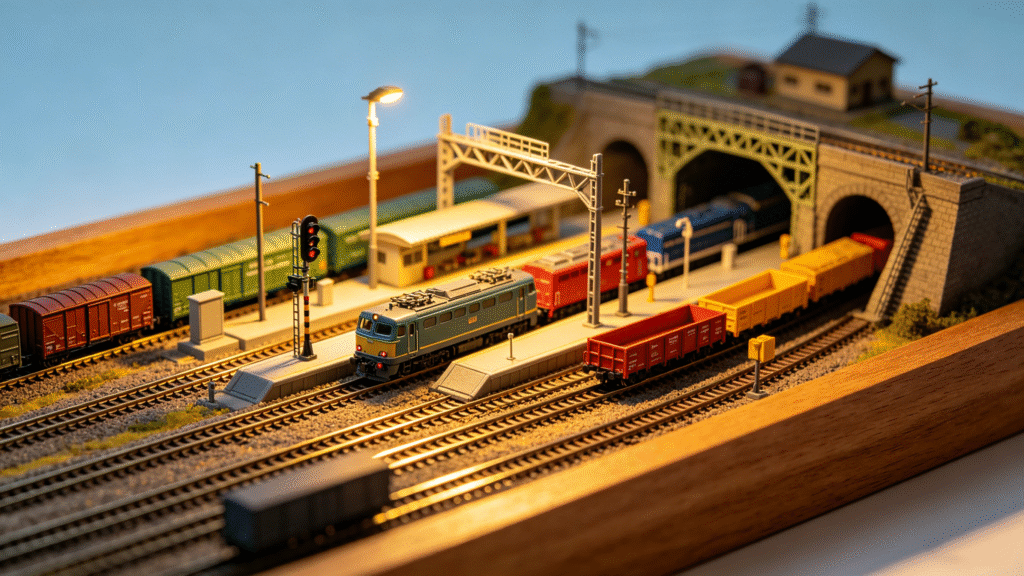
Pricing and Timeline
Small villages (1′ x 2′) cost 500‑1000.Mediumvillages(2′x3′)cost500‑1000.Mediumvillages(2′x3′)cost1200‑2500.
Large village complexes cost $2500‑5000.
Turnaround is 8‑16 weeks.
Shipping is crated and insured.
Model Railroad Mountain Scene Customization Service
A hill behind the village.
Use Model Railroad Mountain Scene Customization Service once.
Rolling hills and a wooded ridge.
Your village nestles in a scenic valley.
Model Railway Crossing Custom Service
A crossing on the village main street.
Use Model Railway Crossing Custom Service once.
Gates and lights control traffic.
Your village has a charming rural crossing.
Custom Model Railroad Farm Scene Model
A farm on the village edge.
Use Custom Model Railroad Farm Scene Model once.
Barns and silos near the fields.
Your village blends into farmland.
Model Railroad City Scenery Custom Service
A distant city skyline on the backdrop.
Use Model Railroad City Scenery Custom Service once.
Faint towers on the horizon.
Your village is near a larger town.
Model Train Carriage Miniature Custom Order Service
A vintage carriage for village passengers.
Use Model Train Carriage Miniature Custom Order Service once.
An old wooden coach stops at the depot.
Your village has a charming local train.
Choosing a Village Designer
Look at portfolios of past village work.
Read reviews from other modelers.
Ask about materials (laser‑cut wood, resin).
Check if they do realistic weathering and signage.
Get a written contract before starting.
Questions to Ask
What is your turnaround time?
Can you match my existing layout style?
Do you include interior lighting for buildings?
What happens if the scene is damaged in shipping?
Do you offer design revisions?
What to Provide the Designer
Scale and footprint dimensions.
Era (Tudor, Georgian, Victorian, modern).
Number of houses and shops.
A church with a steeple or tower.
Any landmark like a pub or school.
The Design Phase
The designer creates a village layout sketch.
You approve building placement and street pattern.
Changes are easiest at this stage.
Expect 2‑3 rounds of revisions.
Then construction begins.
Materials Used
Houses from laser‑cut wood kits.
Roofs from cardstock or wood shingles.
Walls from resin or printed card.
Streets from painted sandpaper or styrene.
Figures from resin or 3D printing.
Building the Village
Houses are assembled and painted.
Roofs are weathered with moss or rust.
Chimneys added with smoke stains.
Gardens with tiny flowers and shrubs.
Every building has its own character.
Streets and Sidewalks
Cobblestone or paved roads.
Stone or brick sidewalks.
Street lamps at every corner.
Signposts with village name.
A village green with a bench.
The Village Church
A stone church with a tall steeple.
Stained glass windows with color.
A cemetery with tiny headstones.
A vicarage next door.
The church anchors the community.
The Village Pub
A thatched or tiled roof.
A sign hanging outside.
Beer barrels and outdoor tables.
Figures drinking and chatting.
Your village has a social heart.
The Village Shop
A general store with a porch.
Goods displayed in the window.
A petrol pump outside.
A post box on the corner.
Residents buy their daily needs.
Figures and Villagers
A vicar walking his dog.
Children playing near the green.
A farmer with a wheelbarrow.
A shopkeeper sweeping the step.
A woman carrying shopping bags.
Trees and Landscaping
Shade trees along the main street.
A village green with mature oaks.
Flower beds in front of cottages.
Hedges and garden walls.
Your village is green and pleasant.
Lighting the Village
Warm amber LEDs in houses.
Street lamps with soft glow.
The church tower lit at dusk.
A pub sign with a tiny bulb.
Your village glows romantically.
Backdrops and Blending
Rolling hills on the backdrop.
A distant church tower on canvas.
The scene blends into your layout.
Trees hide the edges.
Your village looks naturally placed.
Shipping Your Village
The designer uses a wood crate and foam.
Fragile steeples and signs are protected.
Insure for full replacement value.
Open and inspect immediately.
Report damage within 48 hours.
Installing the Village
Place the village on your benchwork.
Align the main street with your road.
Glue or screw the base in place.
Blend edges with ground cover.
Add track near the station.
Operating a Village Railroad
A local passenger train stops twice daily.
A mixed train delivers goods.
The crossing gates lower for trains.
Villagers wave from the platform.
Your village comes alive.
Common Mistakes to Avoid
Houses too uniform in color or style.
Forgetting gardens and fences.
No figures or animals.
Streets too wide for a village.
Skipping the village pub.
Final Tips
Start with a few cottages and a church.
Add the pub and a shop.
Then build the station.
Study real English or American villages.
Your scene will be postcard‑perfect.
Now order your bespoke model railway village today.
Include a mountain scene, crossing service, farm model, city scenery, and carriage miniature service.
Let professionals build your rural masterpiece.
Happy modeling.

Leave a Reply