




What Is a Custom Model Railroad Farm Scene?
It is a farm built just for your layout.
A custom model railroad farm scene includes barns, fields, and animals.
You choose the era, crop type, and season.
The scene is weathered and realistic.
Your trains will deliver grain and pick up livestock.
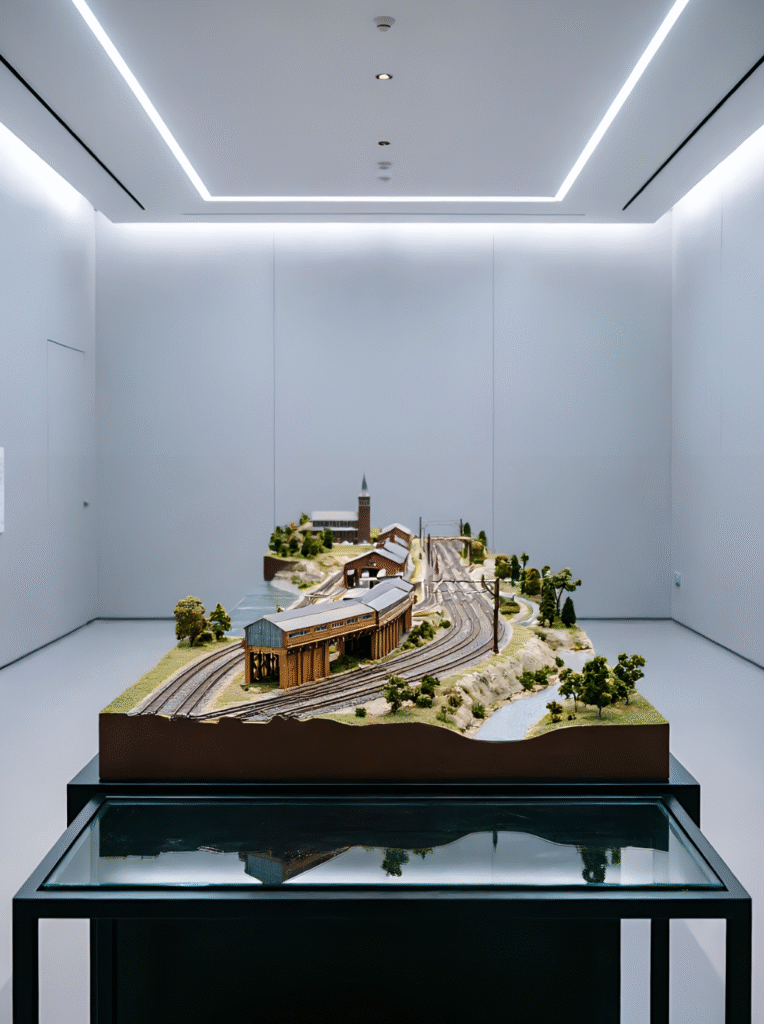
Why Order a Custom Farm Scene?
Building a farm yourself takes many hours.
A custom model railroad farm scene saves you time and effort.
You get professional barn weathering and animal placement.
Perfect for a quiet corner of your layout.
Your trains will serve a beautiful rural industry.
How the Made‑to‑Order Process Works
First, discuss your farm vision with the builder.
Tell them your scale (HO, N, O) and space size.
Share photos of real farms you admire.
They create a design sketch for approval.
Then construction of buildings and fields begins.
What You Receive
A complete farm scene on a sturdy base.
A custom model railroad farm scene includes barn, silo, and farmhouse.
Crops, fences, and gravel roads are added.
Animals and farm vehicles populate the scene.
Ready to place on your layout.
Pricing and Timeline
Small farms (1′ x 2′) cost 300‑600.Mediumfarms(2′x3′)cost300‑600.Mediumfarms(2′x3′)cost700‑1300.
Large farm complexes cost $1500‑3000.
Turnaround is 5‑12 weeks.
Shipping is crated and insured.
Model Railway Scenery Kit Custom Made Service
Order a farm kit to build yourself.
Use Model Railway Scenery Kit Custom Made Service once.
Laser‑cut barn parts and castings.
You assemble your own farm at home.
Model Railroad Industrial Scene Commission Service
A grain elevator next to the farm.
Use Model Railroad Industrial Scene Commission Service once.
Trains load corn and wheat.
Your farm supplies the industry.
Model Train Depot Miniature Custom Service
A small depot near the farm.
Use Model Train Depot Miniature Custom Service once.
Farmers deliver crops by wagon.
Your depot serves the rural community.
Model Railroad Mountain Scene Customization Service
A hill behind the farm.
Use Model Railroad Mountain Scene Customization Service once.
Rolling hills and a wooded ridge.
Your farm sits in a scenic valley.
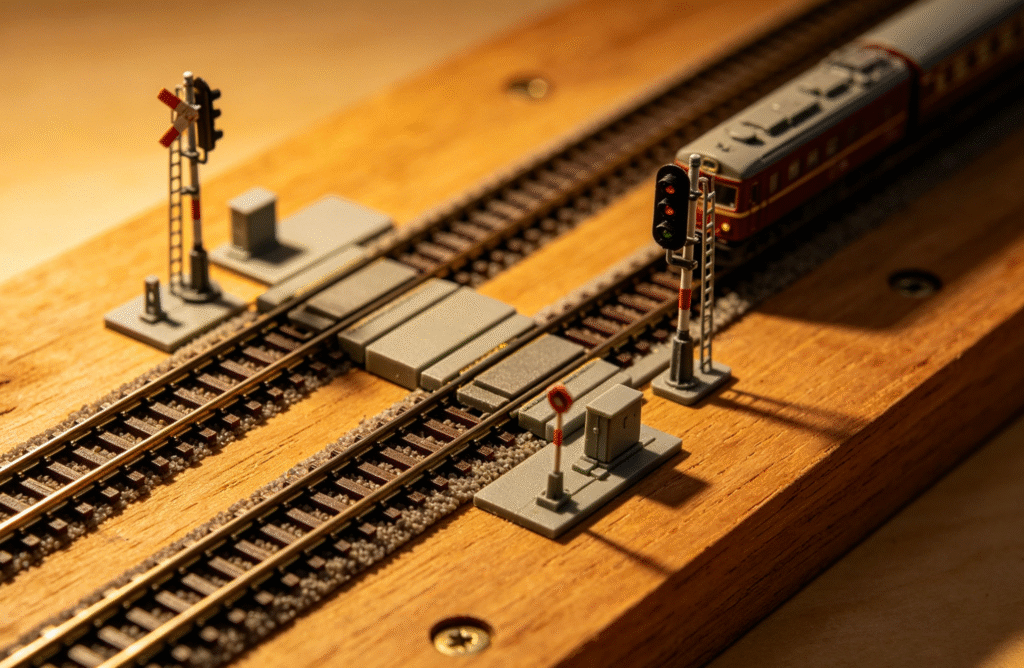
Model Railway Crossing Custom Service
A crossing on the farm access road.
Use Model Railway Crossing Custom Service once.
Gates protect the farm traffic.
Your farm is safe from trains.
Choosing a Farm Scene Builder
Look at portfolios of past farm work.
Read reviews from other modelers.
Ask about materials (wood, resin, laser‑cut).
Check if they weather barns realistically.
Get a written contract before starting.
Questions to Ask
What is your turnaround time?
Can you add specific livestock breeds?
Do you include crops like corn or wheat?
What happens if the scene is damaged in shipping?
Do you offer design revisions?
What to Provide the Builder
Scale and footprint dimensions.
Era (1880s, 1950s, modern).
Number of buildings (barn, silo, house).
Crop type (corn, hay, soybeans).
Season (spring, summer, autumn, winter).
The Design Phase
The builder creates a layout sketch.
You approve barn placement and field layout.
Changes are easiest at this stage.
Expect 2‑3 rounds of revisions.
Then construction begins.
Materials Used
Barns from laser‑cut wood or resin.
Silos from PVC or resin castings.
Fields from static grass and turf.
Animals from resin or 3D printing.
Fencing from wire or laser‑cut wood.
Building the Barn
A classic red barn with white trim.
Weathering with faded paint and rust.
A cupola on the roof.
Hay loft doors and a manure pile.
The barn looks decades old.
Silo and Outbuildings
A concrete or wooden stave silo.
A chicken coop with tiny hens.
A machine shed with old tractor.
A corn crib with yellow cobs.
All structures match the era.
Fields and Crops
Rows of corn or wheat.
Static grass for hay meadows.
A vegetable garden near the house.
Orchards with tiny fruit trees.
Crops change with the season.
Farm Animals
Cows in the pasture.
Horses near the barn.
Pigs in a muddy pen.
Chickens pecking in the yard.
A dog sleeping on the porch.
Farm Vehicles
A red tractor with a wagon.
A pickup truck from the 1950s.
An old rusted grain truck.
A manure spreader behind the barn.
Hand tools leaning on the fence.
Fences and Gates
Wooden split rail fences.
Barbed wire on metal posts.
A gate leading to the pasture.
Weeds growing along the fence.
Your farm is properly enclosed.
Gravel Roads and Driveways
A dirt lane to the barn.
Tractor tracks in the mud.
A gravel road to the depot.
Dust effects with chalk.
Your farm is connected to the world.
Lighting the Farm
Warm light from farmhouse windows.
A yard light on a wooden pole.
The barn interior softly lit.
Moonlight on the fields.
Your farm glows at night.
Backdrops and Blending
Rolling hills on the backdrop.
Distant silos and barns.
The farm blends into your layout.
Trees hide the edges.
Your farm looks natural and peaceful.
Shipping Your Farm Scene
The builder uses a wood crate and foam.
Fragile trees and animals are protected.
Insure for full replacement value.
Open and inspect immediately.
Report damage within 48 hours.
Installing the Farm
Place the farm on your benchwork.
Align roads with your layout.
Glue or screw the base in place.
Blend edges with ground cover.
Add a siding for grain cars.
Operating the Farm
Run a local freight to the elevator.
Deliver empty grain hoppers.
Pick up loaded cars for the mill.
A passenger train stops at the depot.
Your farm provides realistic operations.
Common Mistakes to Avoid
Buildings too clean and new.
Forgetting fences and animals.
No crops or fields.
Roads too wide or paved.
Skipping the farmhouse.
Final Tips
Start with one barn and silo.
Add a few cows and a fence.
Then build the farmhouse.
Study real farm photos.
Your scene will feel peaceful.
Now order your custom model railroad farm scene today.
Include a scenery kit, industrial scene, depot miniature, mountain scene, and crossing service.
Let professionals build your rural masterpiece.
Happy modeling.