



I. Concept Breakdown: What is Model Building as a Hobby?
Model building, as a hobby, refers to the activity of creating scale replicas of real-world objects through a series of manual processes such as assembling, sanding, painting, and modifying standardized kits or loose parts.
Its core subjects cover a wide range of categories, including not only hardcore types like industrial equipment models, sand table models, and mechanical production line models that lean toward industrial display, but also more popular options such as ship models, aircraft models, car models, and architectural models. In terms of operational characteristics, this hobby is not simply “putting together building blocks”; instead, it is a combination of hands-on practice, concentration training, spatial thinking, and aesthetic creativity. Participants need to balance the rigor of data verification, the delicacy of manual crafting, and the creativity of personalized modifications, ultimately transforming 2D blueprints into 3D physical finished models.
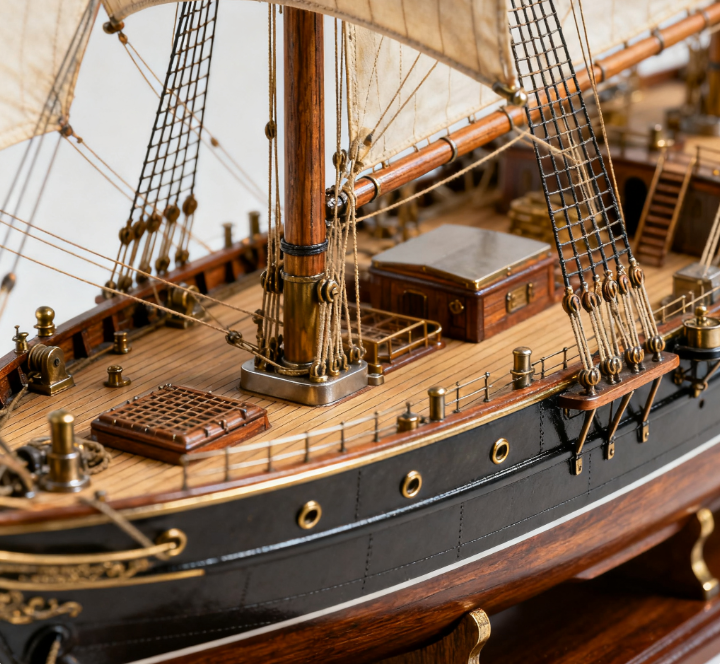
Unlike other leisure hobbies, the core charm of model building lies in the “immersion of the process” and the “sense of accomplishment from the result”. It does not pursue fast-paced entertainment stimulation, but rather focuses on slow, meticulous craftsmanship, making it suitable for people who enjoy focusing on tasks with patience.
II. Two Common Questions and Answers About Model Building as a Hobby
Question 1: Is model building too difficult for beginners? I’m worried I’m not handy enough to do a good job.
Answer: Beginners don’t need to fear being “unhandy” at all—you can control the difficulty level yourself.
First of all, model kits are classified into entry-level, intermediate, and advanced categories. Newcomers can prioritize entry-level kits with high modularity and detailed instructions, such as snap-fit static industrial equipment models or small sand table basic kits. These models do not require complex cutting or painting; you can complete the basic form simply by assembling them step by step.
Additionally, there are plenty of free tutorial resources available today, covering everything from tool usage to sanding techniques with detailed explanations. In the initial stage, you can focus on “finishing the product” without striving for perfect details. Once you are familiar with the basic operations, you can then try advanced techniques like painting and installing dynamic components. The core of model building is to enjoy the process, not to pursue “perfect replication” right from the start. Even a finished product with minor flaws is a unique achievement of your own.
Question 2: Does model building require a lot of money? I’m worried it will become an expensive hobby.
Answer: The cost of model building is highly flexible and can be adjusted according to your budget—it is not necessarily a “high-cost” hobby.
In terms of cost components, it mainly includes kit costs and tool costs:
- Kit costs: Entry-level static model kits are affordable, ranging from tens to a few hundred dollars. If you opt for industrial sand table models or aircraft models with dynamic components (such as motors and lights), the price will be slightly higher, but you can upgrade gradually based on your needs rather than buying everything at once.
- Tool costs: Beginners do not need to purchase professional tool sets initially. Common household items like scissors, tweezers, sandpaper, plus a bottle of basic glue and paint, are sufficient to meet entry-level needs. Later, if you want to improve the quality of your finished models, you can gradually add professional tools such as fine brushes and sanders.
Overall, this hobby can be adapted to different budgets. The key is to plan according to your own financial situation instead of blindly pursuing high-end equipment.
III. Key Benefits of Model Building as a Hobby
- Enhances Concentration and Patience, Effectively Relieving AnxietyThe process of model building requires long periods of focus—verifying blueprint dimensions, sanding the edges of parts, and applying fine paint details. None of these steps can be rushed. This immersive operation allows people to temporarily escape the trivialities of work and daily life, entering a state of “flow”. It not only improves concentration but also effectively alleviates restlessness and anxiety, serving as a “slow-paced stress relief method”.
- Boosts Spatial Thinking and Hands-on Skills, Benefiting Work and Daily LifeAt its core, model building is the process of transforming 2D blueprints into 3D objects. This process can significantly enhance spatial imagination and structural cognition abilities. For people working in fields like industrial design, sand table customization, and engineering planning, these skills can directly benefit their work. For example, those familiar with model scaling and structural disassembly will have a more accurate grasp of equipment layout and flow planning when creating industrial sand tables. Meanwhile, tasks like sanding, gluing, and painting can improve the coordination of fine hand movements, gradually enhancing hands-on skills over time.
- Cultivates a Craftsmanship Spirit and Brings a Strong Sense of AccomplishmentWatching a pile of scattered parts turn into a finely detailed finished model through sanding, assembling, and painting requires repeated adjustments and refinements. When you see your work transform from a “rough prototype” to a “fine product”—especially when an industrial model accurately replicates equipment structures or a sand table presents a complete plan—you will gain a strong sense of accomplishment and confidence. This process of “focusing on one thing and mastering it” can also cultivate a spirit of striving for excellence, an attitude that can be transferred to both work and daily life.
- Expands Social Circles and Links Hobbies with WorkThe model building community is full of like-minded enthusiasts. Through model exhibitions, online forums, and other channels, you can meet new friends, exchange production techniques, and share experiences of your finished works. More importantly, for people engaged in model customization businesses, this hobby can directly support their work. For instance, being familiar with the production details of industrial equipment models enables you to better understand customer needs; hands-on experience in model building also allows you to explain the craftsmanship and highlights of sand tables to clients more professionally.
IV. Step-by-Step Guide to Starting Model Building as a Hobby
Step 1: Clarify Your Direction and Choose the Right Model Type
First, select a model type based on your interests and needs:
- If you prefer a rugged industrial style and want to connect your hobby with work, you can prioritize industrial equipment models or small sand table kits. These models are highly practical and can complement your professional skills.
- If you are pursuing pure leisure, you can start with popular options like ship or car models.
Beginners are advised to start with static models, avoiding dynamic models that require complex circuit debugging to lower the entry barrier.
Step 2: Prepare Basic Tools—Avoid “One-Time Bulk Purchases”
Beginners don’t need complicated tools; these essentials are enough to get started:
- Core tools: Tweezers (for assisting in gluing small parts), scissors/utility knives (for cutting parts), and fine sandpaper (for smoothing burrs).
- Consumables: Model-specific glue (to prevent damaging parts) and basic paint and brushes (optional—static models can be left unpainted initially).
- Auxiliary supplies: A workbench protective mat (to prevent glue from staining the tabletop) and cotton swabs (for cleaning dust from detailed areas).
Remember not to buy professional-grade tools right at the beginning—upgrade them as needed once you become more skilled.
Step 3: Learn Basic Skills Starting with “Understanding Blueprints”
- First, carefully read the kit instructions to understand part numbers and assembly order, avoiding rework due to incorrect assembly.
- Learn basic sanding techniques: Gently sand the edges of parts with fine sandpaper to remove burrs and injection marks, ensuring parts fit together snugly.
- Master basic gluing methods: Apply glue thinly to avoid overflow that can damage parts. After joining the parts, use clamps to hold them in place and wait for the glue to dry completely before proceeding to the next step.
You can learn these skills through online tutorials, which typically take only 1–2 hours to grasp the basics.
Step 4: Start Building—Pursue Details Gradually
- Main structure assembly: First, assemble the core structure of the model (e.g., the base of a sand table or the body of an industrial device) to ensure overall stability—this is the foundation.
- Adding details: Once the main structure is dry, attach small accessories (such as gears on equipment or street lamps on a sand table), using tweezers to assist with positioning to prevent shifting.
- Personalized optimization: You can skip painting in the entry stage. After you are familiar with the process, you can try painting the model or adding dynamic components like lights to create a unique style.
Step 5: Maintain the Finished Model to Extend Its Lifespan
- Keep the finished model away from direct sunlight and humid environments to prevent parts from warping and paint from fading.
- Regularly clean dust from the surface with cotton swabs—do not wipe it with a damp cloth to avoid damaging the paint job.
- You can add a display case to static models to protect them from dust and showcase them as home decorations.
V. Practical Outcomes of Model Building as a Hobby
Outcome 1: A Beginner’s First Industrial Equipment Model—Gaining Concentration and Confidence
A working professional new to model building chose an entry-level small industrial machine tool kit. Initially worried about not being able to do a good job, he followed the steps to assemble and sand the parts slowly, completing the finished product over three evenings. Though it didn’t have complex paintwork, the parts fit together neatly and the structure was stable. This process allowed him to temporarily set aside work stress, significantly improving his concentration. When he placed the finished model on his desk, he felt a great sense of accomplishment. Since then, he has stuck with model building—it not only helps him relieve work-related anxiety but also has taught him to apply the patience he developed from the hobby to his job, boosting his work efficiency.
Outcome 2: A Sand Table Enthusiast—Turning a Hobby into a Work Advantage
A professional engaged in industrial sand table customization integrated his model building hobby with his work. He spent his spare time creating various industrial production line models, accumulating rich experience in sanding and painting, and developing a deeper understanding of equipment structures in the process. When communicating with clients about sand table customization needs, he can quickly grasp their core requirements and accurately replicate equipment details. He even showcases his self-made models as case studies to clients, greatly improving communication efficiency and helping him secure multiple orders. His hobby not only enriches his leisure time but also has become a valuable “plus” for his career.
Outcome 3: Parent-Child Model Building—Enhancing Interaction and Stimulating Thinking Development
A pair of parents made a small industrial park sand table model with their child. The parents were responsible for assembling the main structure, while the child handled attaching small accessories like street lamps and greenery. Throughout the process, they checked the blueprints together and discussed the layout, not only strengthening parent-child interaction but also helping the child improve spatial thinking and hands-on skills through practice. After completing the model, the child gained a direct understanding of industrial park planning and developed an interest in industrial models. This hobby has become a shared topic for the family and has allowed the child to learn practical knowledge while having fun.


Leave a Reply