



For aircraft model enthusiasts, the core measure of a model’s quality lies in the precision of aircraft model cockpit replication. If the fuselage contour is an aircraft’s “visual appeal,” the cockpit is the model’s “spiritual core”—it embodies the operational logic and design essence of real aircraft, serving as the key link between the model and actual flight. Whether it’s a 1:48 scale classic fighter jet or an 80-centimeter large civil aviation model, only by accurately reproducing every detail of the cockpit can the model break free from being a mere “ornament” and become a “miniature cockpit” with both collectible and educational value. At high-end model exhibitions, works where instrument panel scales, control stick textures, and button layouts are clearly visible always captivate enthusiasts, a testament to the unique charm of aircraft model cockpit replication.
The Foundation of Replication: From Historical Blueprints to Precise Data
The prerequisite for aircraft model cockpit replication is access to authoritative, accurate original data. For vintage aircraft models, designers must consult historical blueprints preserved in archives, verifying cockpit layouts, instrument models, and even button labels to ensure the replication aligns with the era’s characteristics. For example, with some World War II fighter jets, original blueprints may be incomplete. Teams then supplement detailed data through on-site measurements of museum artifacts, oral recollections from veterans, and enlarged analysis of historical photographs.
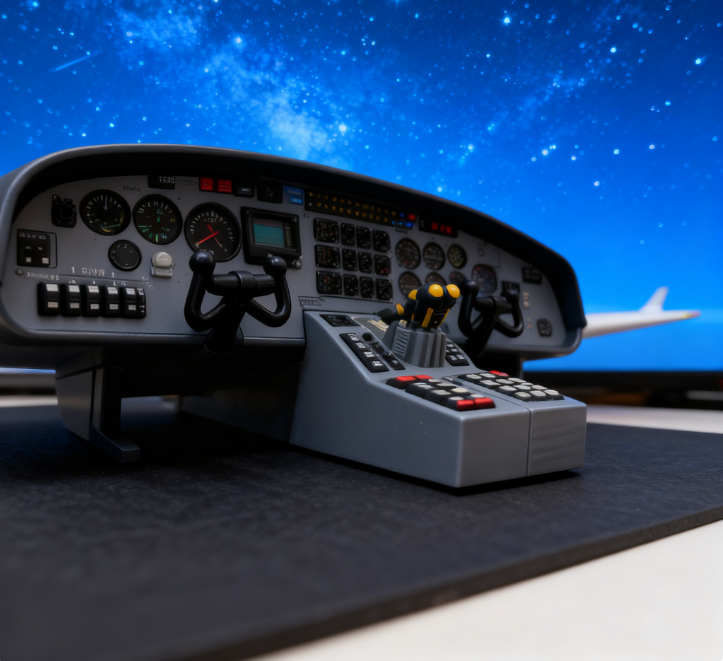
For modern aircraft models, replication relies on official data provided by aviation enterprises or 3D scanning technology. By conducting 1:1 scans of real aircraft cockpits, precise parameters such as instrument panel curvature, button spacing, and control stick thickness are captured. These data are then reconstructed through computer modeling, ensuring the aircraft model cockpit replication has an error margin of less than one millimeter compared to the real cockpit.
Process Breakdown: Craftsmanship for Millimeter-Level Precision
1. Miniature Production of Core Components
Core cockpit components like instrument panels, control sticks, and throttle levers are the focus of aircraft model cockpit replication. Instrument panels are crafted using high-precision photosensitive resin or metal etchings, with densely packed scales, pointers, and indicator lights miniaturized and reproduced. High-end models even embed micro LED lights inside the instrument panels to simulate the lighting effects during actual flight. Control sticks are manufactured via CNC machining to replicate anti-slip textures and gear latches, with a slight range of motion to enhance interactive experience.
2. Interior Material and Color Matching
To mimic the texture of real cockpits, the replication process strictly matches interior materials and colors. Cockpit seats are wrapped in simulated leather, reproducing stitching textures and the softness of foam padding. Interior panels use matte plastic or metal sheets to avoid glare affecting visibility. Buttons and labels are produced through pad printing or laser engraving, ensuring clear, wear-resistant lettering that aligns with the interior style of real aircraft.
3. Weathering and Scene-Setting Details
For vintage aircraft models, aircraft model cockpit replication includes weathering techniques. Light sanding on panel edges to create scratches, applying a trace of dark weathering paint in button gaps to simulate dust accumulation, and mimicking wear marks on control sticks all restore the vicissitudes of long-term aircraft use. Some models also add scene-setting accessories like miniature pilot figures, maps, and tools inside the cockpit, enhancing the narrative depth of the replicated details.
Extended Value: Diverse Significance from Collection to Education
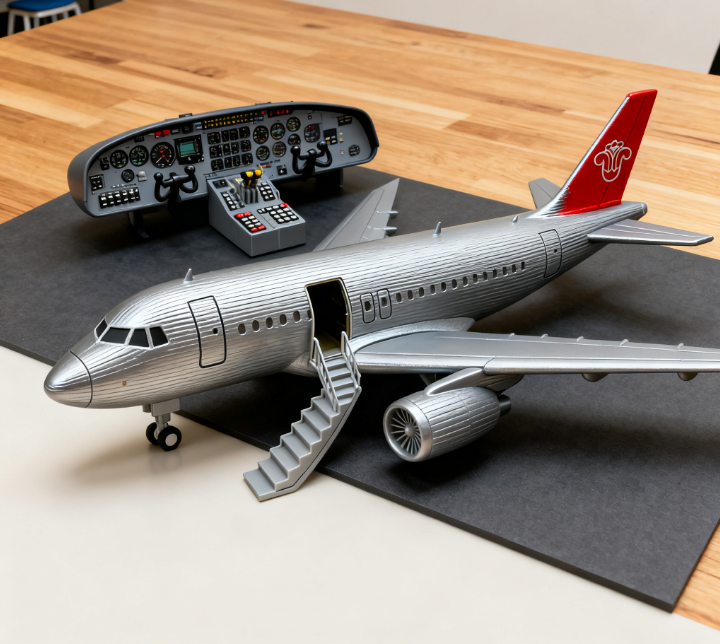
The value of aircraft model cockpit replication extends far beyond mere collection. In aviation education, high-precision replicated cockpit models allow young people to intuitively understand aircraft operational principles. By observing instrument panel function zones and control stick roles, they build a foundational understanding of aviation knowledge. In aviation enterprise training, simplified replicated cockpit models serve as basic teaching aids to help new employees quickly familiarize themselves with cockpit layouts.
For collectors, the precision of aircraft model cockpit replication directly determines the model’s collectible value. For the same aircraft model, the more accurate the cockpit detail reproduction, the higher the market premium. Some limited-edition replicated models have even become “treasures” sought after by aviation enthusiasts. Additionally, they act as a bridge connecting aviation culture with the public, allowing more people to experience the charm of flight through these miniature details.
Industry Trends: Replication Upgrades Empowered by Technology
With the development of 3D printing, AI modeling, and other technologies, aircraft model cockpit replication is moving toward greater precision and intelligence. AI technology can automatically optimize model details by analyzing large volumes of real cockpit data, reducing human error. New materials such as light-transmitting resin and flexible plastic enable more complex structural replication and realistic texture presentation. In the future, replicated cockpit models linked to virtual flight systems may emerge, allowing enthusiasts to experience simulated flight while interacting with the model.
Aircraft model cockpit replication is a fusion of technology and craftsmanship, a tribute to the dream of flight. Every millimeter-level reproduction and carefully polished process embodies a passion for and respect for aviation culture. Within the confined space of the cockpit, we can witness the ingenuity of industrial design and feel the weight of history—this is its most touching value.
Core Craftsmanship Checklist for Aircraft Model Cockpit Replication
1. Core Component Replication (Materials + Processes)
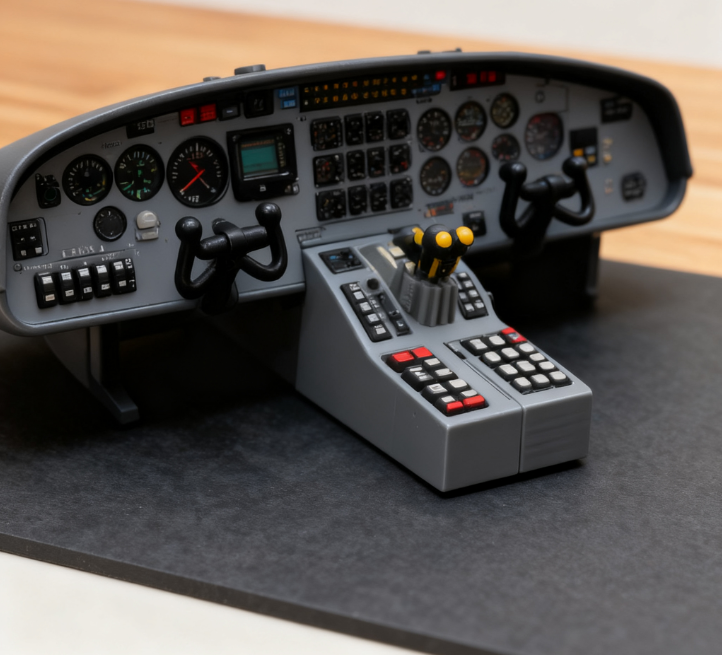
- Instrument Panels: Materials include high-precision photosensitive resin and metal etchings; processes involve 3D printing (0.05mm precision) + laser-engraved scales, with micro LED lights embedded in high-end versions.
- Control Sticks/Throttle Levers: Materials are aluminum alloy and ABS plastic; processes use CNC machining for shaping, with anti-slip texture treatment and reserved slight movement angles.
- Buttons & Switches: Materials include flexible resin and small metal contacts; processes involve pad printing/laser-engraved labels, with press feedback functionality for some.
- Seats: Materials consist of simulated leather, high-density foam, and plastic frames; processes include hand-stitched leather to replicate stitching and seat curvature.
2. Interior Texture Replication (Materials + Finishing)
- Cockpit Panels: Materials are matte ABS sheets and aviation-grade aluminum thin plates; finishing involves matte paint spraying and chamfering of edges.
- Cockpit Linings: Materials include flocked fabric and simulated carbon fiber stickers; finishing requires precise cutting and fitting, fixed with adhesive to avoid wrinkles.
- Canopy: Materials are high-transparency PC boards and acrylic; finishing involves thermoforming and anti-scratch coating to simulate real glass clarity.
3. Detail Optimization Processes (Weathering + Scene-Setting)
- Weathering Treatment: Tools include fine sandpaper, weathering paint, and cotton swabs; processes involve light sanding of panel edges for scratches, applying trace dark weathering paint in button gaps, and simulating wear on control sticks.
- Scene-Setting Accessories: Materials are resin and miniature metal parts; processes use 3D printing to create miniature pilots, maps, and tools, placed proportionally inside the cockpit.
4. Precision Control Standards
- Dimensional Tolerance: Scale error of core components compared to real cockpits ≤ 0.1mm; button spacing error ≤ 0.5mm.
- Color Matching: Interior color deviation from real aircraft original color codes ≤ ΔE2; label clarity ≥ 300dpi.
- Assembly Requirements: Seamless component joining; smooth operation of movable parts (control sticks, switches) without jamming.
Leave a Reply