



The proportion of an aircraft model refers to the ratio of the model size to the actual aircraft size. It directly determines the model’s dimensions, detail presentation capabilities, and applicable scenarios. From 1:1 full-scale replicas to 1:200 miniature ornaments, different Proportions Aircraft Models each have their own advantages. This guide will help you quickly select the most suitable proportion for your aircraft model based on collection, display, and production needs.
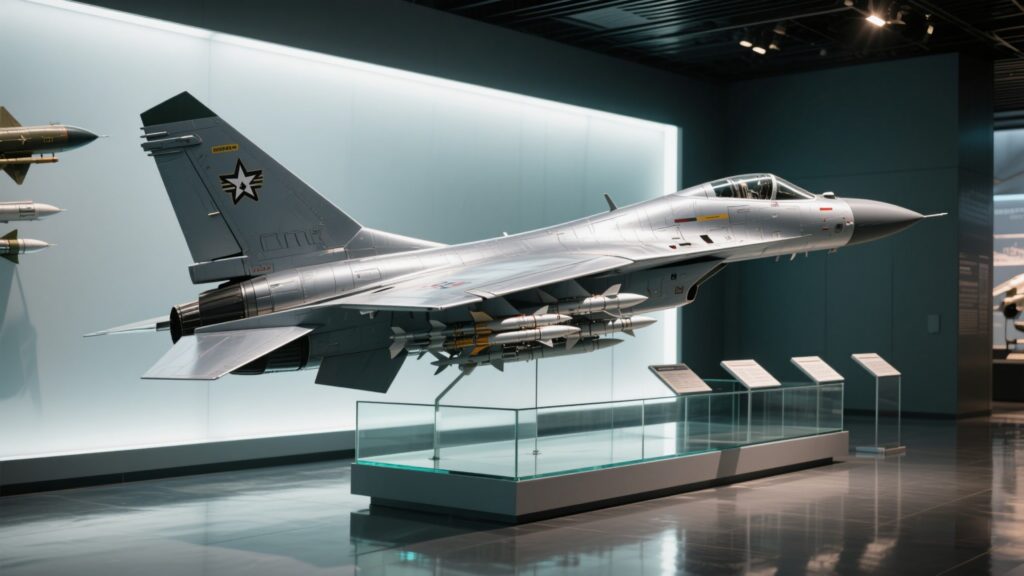
I. Classification of Common Proportions Aircraft Models and Their Core Features
The naming of aircraft model proportions follows the principle of “model size : actual size”. For example, a 1:48 scale model means that 48 length units of the real aircraft correspond to 1 length unit of the model. Below are the most mainstream Proportions Aircraft Models on the market and their applicable scenarios:
| Proportion | Model Size (Taking a fighter jet as an example, the real aircraft is about 15 meters long) | Core Features | Suitable Crowd |
|---|---|---|---|
| 1:1 | Identical to the real aircraft, about 15 meters long | Ultimate restoration with 100% detail replication; ideal as an exhibition and science popularization prop | Museums, aviation enterprises, large theme venues |
| 1:24 | Approximately 62.5 centimeters long | Large size with rich details; capable of restoring complex structures such as cockpits and landing gear | Senior collectors, model studios, diorama-building enthusiasts |
| 1:32 | Approximately 46.8 centimeters long | A perfect balance between detail and size; suitable for fine painting and weathering techniques | High-end collectors, participants in model competitions |
| 1:48 | Approximately 31.2 centimeters long | The best cost-effective option, balancing detail and portability; it is the mainstream proportion for military/civil aviation Proportions Aircraft Models | General enthusiasts, beginners, collection displayers |
| 1:72 | Approximately 20.8 centimeters long | Compact and easy to store; suitable for batch collection (such as fighter jet formations); moderate details | Enthusiasts of batch collection, historical diorama restorers |
| 1:144 | Approximately 10.4 centimeters long | Miniature size; suitable for displaying large-scale fleets or aircraft carrier-based aircraft formations | Macro diorama builders, collectors with limited space |
| 1:200 | Approximately 7.5 centimeters long | Ultra-small size; mostly used for civil aviation airliner models, suitable for airport sand table construction | Civil aviation enthusiasts, sand table model makers |
II. Selecting Proportions Aircraft Models Based on Needs: 4 Core Considerations
1. Collection Purpose: Personal Play vs. Batch Display
- If you pursue the ultimate details of a single aircraft model and want to personally polish cockpit instrument panels and simulate fuselage rivet textures, prioritize Proportions Aircraft Models in 1:24, 1:32, and 1:48 scales. These models are equipped with abundant parts, suitable for fine processing, and the finished products have strong ornamental value.
- If you like to build aircraft fleets (such as World War II fighter squadrons, civil aviation airliner fleets) or construct airport/carrier sand tables, 1:72, 1:144, and 1:200 Proportions Aircraft Models are the first choices. Small-scale models do not occupy much space and can easily restore large-scale scenarios.
2. Display Space: Home Placement vs. Professional Exhibition Halls
- Home display (bookshelves, display cabinets): Recommended Proportions Aircraft Models are 1:48 and 1:72 scales. They are moderate in size, which can not only show the characteristics of the model but also not take up too much space due to their large size; the 1:72 scale can even place several models to form a “formation”.
- Professional exhibition halls, store windows: You can choose large-scale Proportions Aircraft Models in 1:1 and 1:24 scales. The giant size can attract attention, making them suitable as the treasure of the museum or marketing props.
3. Production Difficulty: Beginner Entry vs. Veteran Advancement
- Beginners: Prioritize Proportions Aircraft Models in 1:48 and 1:72 scales. The model kits of these two proportions have mature craftsmanship, a moderate number of parts, low assembly difficulty, and high fault tolerance, making them suitable for practicing basic skills such as painting and splicing.
- Veterans: Challenge large-scale Proportions Aircraft Models in 1:24 and 1:32 scales. These models have numerous parts (even including metal etchings and resin modification parts), which require precise polishing and bonding techniques, suitable for senior players pursuing ultimate restoration.
4. Aircraft Type Adaptation: Fighter Jets vs. Civil Aviation Airliners
- Fighter jets/military aircraft: 1:48 and 1:72 are the golden Proportions Aircraft Models. Small-sized fighter jets (such as J-10, F-16) can highlight details with 1:48 scale; if collecting large bombers (such as B-52), 1:72 scale is easier to store.
- Civil aviation airliners: 1:144 and 1:200 are more mainstream. Real civil aviation airliners are large in size (e.g., Boeing 787 is about 57 meters long), and a 1:200 scale model is only about 28 centimeters, suitable for displaying fuselage paint and airline logos; if pursuing details, you can choose 1:48 scale models of small regional airliners.
III. Pitfall Avoidance Guide for Selecting Proportions Aircraft Models
- Don’t blindly pursue large-scale models: Although large-scale Proportions Aircraft Models are rich in details, they are expensive, occupy a lot of space, and take a long time to make. If beginners directly start with 1:24 scale models, they are likely to give up due to high difficulty.
- Pay attention to kit compatibility: Parts of Proportions Aircraft Models of the same scale from different brands are not necessarily universal. Custom modified parts (such as metal landing gear, etchings) need to be confirmed to match the model proportion.
- Choose materials according to usage: Large-scale Proportions Aircraft Models (1:24, 1:32) are suitable for resin and metal materials to enhance texture; small-scale Proportions Aircraft Models (1:144, 1:200) are recommended to use plastic materials to reduce weight and cost.
IV. Summary: Quick Formula for Selecting Proportions Aircraft Models
- For beginners, choose 1:48 and 1:72 Proportions Aircraft Models—easy to make, easy to store, and cost-effective;
- For fine collection, choose 1:24 and 1:32 Proportions Aircraft Models—full of details and excellent texture;
- For diorama building, choose 1:72 and 1:144 Proportions Aircraft Models—easy to form aircraft fleets;
- For exhibition display, choose 1:1 and 1:24 Proportions Aircraft Models—eye-catching effect is directly maximized.
Choosing the right proportion for aircraft models can not only enhance the fun of making and collecting but also perfectly match the model to your needs. Whether it is an exquisite ornament placed on the desk or a shocking replica in the exhibition hall, the appropriate Proportions Aircraft Models are the “soul” of the model.
Large aircraft model manufacturing process
Design and Modeling: Collect the actual aircraft drawings, perform 3D modeling, and proportionally disassemble modules such as the fuselage and wings
Construct the load-bearing skeleton: Weld the main frame using steel/aluminum alloy to ensure stability and deformation resistance
Shell forming: FRP mold flipping or ABS hot pressing to create the aircraft’s curved exterior shape
Assembly and Splicing: Segmentally join the fuselage, wings, and tail, reinforcing the interfaces
Sandblasting and painting: After seam filling and sanding, apply paint, then attach logos, signs, and detailed parts
Final assembly inspection: Install lighting and interior components, inspect the exterior and structure before shipment

Leave a Reply