



Encountering the vintage aviation dream
On a sunny weekend, I stepped into a bustling model exhibition. As soon as I entered, I was drawn by the waves of exclamations. Looking in the direction of the sound, I saw a group of old-fashioned aircraft model replicas in a 1:48 scale, quietly displayed on the exhibition stand. They resembled flying messengers who had traveled through time and space, instantly capturing everyone’s attention.
These models are precisely scaled, with smooth and natural lines on the fuselage. Every bend of the wings and every rivet on the fuselage are clearly visible. Their vibrant colors and vintage charm are reminiscent of the old-fashioned planes soaring in the sky that I have seen in old photographs. The paintwork on the fuselage shimmers with a charming luster under the lights, making one unable to resist getting closer for a closer look. At gatherings of model enthusiasts, everyone gathers around these 1:48 scale vintage aircraft model replica for lively discussions. Some share their knowledge of the history of old-fashioned planes, while others rave about the craftsmanship of the models. These discussions have filled me with curiosity and a desire to explore the stories behind these models. Keywords: 1:48 scale replicas of old-fashioned airplane models, model exhibition, gatherings of model enthusiasts
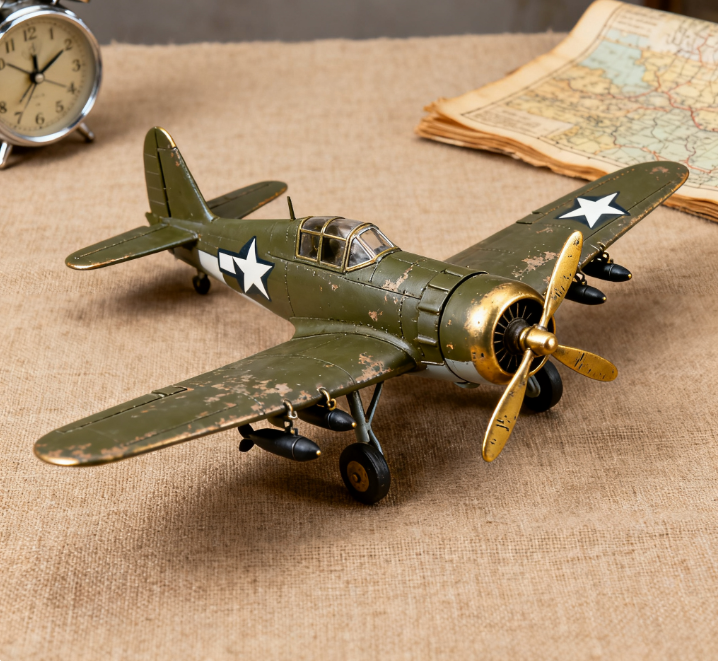
1:48 scale vintage aircraft model replica
In the field of model making, the choice of scale is crucial, and the 1:48 scale is considered classic. It is like a magical key that can perfectly unlock the charm of vintage aircraft model replicas. Compared to smaller scales, 1:48 models have a unique advantage in detail presentation, as they can clearly showcase the complex structure and exquisite components of vintage aircraft, providing a feast for the eyes of enthusiasts. For example, in vintage propeller aircraft, details such as the number and shape of propeller blades, engine air intakes, and radiators can be accurately reproduced at a 1:48 scale. Those tiny rivets, which may only appear as blurry dots in smaller scale models, are clearly visible and neatly arranged on 1:48 models, as if they can make one feel the dedication and perseverance of the craftsmen who meticulously crafted them back in the day.
For vintage jet aircraft models, the 1:48 scale also shines brilliantly. The seams of the skin on the fuselage, the detailed construction of missiles and auxiliary fuel tanks mounted under the wings, as well as the instrument panel, joystick, and other equipment inside the cockpit, can all be perfectly replicated. This scale not only satisfies model makers’ extreme pursuit of detail, allowing them to fully display their exquisite craftsmanship during the production process, but also presents a complete and harmonious overall appearance after completion. It does not appear complicated due to an excessive pursuit of detail, nor does it lose the model’s exquisite feel due to an oversized scale. Whether placed on a display stand shining alone or constructed into a scene with other models of the same scale, the 1:48 scale vintage aircraft model replica can become the focus with its unique charm. 1:48 scale vintage aircraft model replica, detail display
Craftsmanship carves time
When crafting 1:48 scale replicas of vintage aircraft models, the choice of materials is the cornerstone of quality. Alloy materials, with their strong and durable characteristics, are the ideal choice for constructing the model’s frame. They provide stable support for the entire model, ensuring that its structure remains intact over time. Plastics, on the other hand, are favored for their good malleability and lighter weight. Those variously shaped, complex, and intricate parts of the model, such as propellers and cockpit covers, are often carefully crafted from plastic. Plastics can be injection molded through precise molds, perfectly replicating every subtle feature of vintage aircraft parts. They are also easy to process and paint, adding rich colors and textures to the model.
Starting from the production of parts, model craftsmen embark on a conversation with time. Each part seems to be endowed with life, evolving from an ordinary piece of material through multiple processes such as cutting, polishing, and shaping, gradually taking on the appearance of an old aircraft component. When crafting engine parts, the craftsmen need to precisely grasp the dimensions and shape, using precise carving tools to engrave the complex texture and structure of the engine on metal or plastic. Every scratch and every corner embodies their dedication and patience.
After the parts are crafted, the crucial overall assembly process begins. It’s like a precise dance, where every part must fit together at the right time and in the exact position. The connection between the wings and the fuselage not only requires precise angles but also ensures a seamless joint, as if they were originally one piece. During the assembly process, craftsmen use specialized tools and glue to carefully fix the various parts together. Every press and adjustment reflects their love and respect for vintage aircraft.
The coloring process is a crucial step in injecting soul into vintage aircraft model replicas. Model craftsmen carefully blend colors that match the historical materials and photographs of vintage aircraft. In their hands, the airbrush becomes a vivid paintbrush, evenly spraying paint onto the model surface. From the main color tone of the fuselage to the logos and patterns on the wings, every transition of color is natural and smooth, as if the vintage aircraft has just landed gently from the historical sky. To make the model more realistic, they also employ various coloring techniques, such as adding shadows and highlights, allowing the model to exhibit a sense of three-dimensionality and depth in the changes of light and shadow, as if it has been endowed with a realistic flying texture.
Finally, the antique craftsmanship brings these 1:48 scale replicas of vintage aircraft models through time and space, returning to that legendary era of aviation. Craftsmen use special materials and tools to simulate the wear, scratches, and oxidation marks that the aircraft has experienced over the years. A light layer of rust is gently applied to the edges of the wings and the corners of the fuselage; fine brushstrokes are used to outline subtle scratches on the surface of the fuselage. These seemingly casual marks make the model more vivid and authentic, as if telling the story of the past glory and vicissitudes of vintage aircraft. Every antique mark is a tribute from the model craftsmen to history and a continuation of the vintage aircraft culture. Keywords: manufacturing materials, parts production, overall assembly, painting, antique craftsmanship
The market is constantly changing
In the vast realm of today’s collectibles market, vintage aircraft model replicas in a 1:48 scale stand out like a dazzling star, exuding a unique charm and capturing the attention of numerous collectors and model enthusiasts. With their precise scale, exquisite craftsmanship, and profound historical and cultural significance, they have secured a place in the realm of collectibles, becoming treasures eagerly pursued by collectors. For collectors, these models are not merely exquisite works of art, but also serve as carriers of historical memories and aviation culture, possessing immense collectible value.
In the community of enthusiasts, 1:48 scale vintage aircraft model replica Popularity continues to rise. With the improvement of people’s living standards and the increasing pursuit of spiritual and cultural values, more and more people are paying attention to and engaging in the field of model collecting and making. Especially with the addition of the younger generation of enthusiasts, this market has been injected with new vitality. They are passionate about aviation knowledge, have higher requirements for the details and quality of models, and pay more attention to the historical and cultural value embodied in models. They enjoy collecting different models of vintage aircraft replicas to gain a deeper understanding of the historical development of aviation.
From the perspective of sales channels, online platforms have become an important front for the sales of 1:48 scale replica vintage aircraft models, thanks to their convenience and broad coverage. On major e-commerce platforms, a wide range of vintage aircraft models are available, and merchants attract consumers to place orders through exquisite image displays, detailed product introductions, and user reviews. Some professional model forums and social media groups also provide a platform for enthusiasts to exchange and trade. Here, they can share their collection experiences, display their latest model collections, and directly communicate with sellers to purchase their desired 1:48 scale replica vintage aircraft models.
Offline sales cannot be overlooked either. Model specialty stores, toy stores, and various model exhibitions are all great places for enthusiasts to find their favorite models. In model specialty stores, consumers can personally touch and feel the texture of the models, appreciate the details of the models up close, and receive explanations and suggestions from professional sales staff. This intuitive shopping experience cannot be replaced by online sales. Model exhibitions are even more of a grand gathering for model enthusiasts. Here, not only can you see exquisite vintage aircraft model replicas from around the world, but you can also participate in various exchange activities, share insights with like-minded people, and learn about the latest industry trends. Many limited edition and special edition models are often launched at exhibitions, attracting many enthusiasts to snap them up.
The market competition is also fierce, with numerous model manufacturers aiming at this market and launching distinctive products. Some well-known brands, relying on years of technological accumulation and good reputation, have occupied a leading position in the market. They focus on product quality and detail reproduction, continuously innovate, and introduce new models and paint schemes to meet the increasingly diverse needs of consumers. At the same time, some emerging brands have also emerged in the market with innovative designs, personalized customization services, and cost-effective products, gradually winning the favor of some consumers. In order to stand out in the competition, various businesses have also launched fierce competition in terms of price and after-sales service. In terms of price, the price of 1:48 scale vintage aircraft model replicas ranges from tens of yuan to thousands of yuan, depending on factors such as material, craftsmanship, and rarity of the model, meeting the needs of different consumer levels. In terms of after-sales service, businesses provide thoughtful services such as return and exchange guarantees, model maintenance guidance, and strive to enhance consumer satisfaction.
A faithful recorder of history
Every 1:48 scale vintage aircraft model replica is like a vivid history textbook, quietly telling the legendary stories of the past aviation era. Take the DC-3 aircraft model as an example. The prototype it replicates left a profound mark in aviation history. Born during World War II, the DC-3 played a significant role in the Normandy landings by towing gliders, contributing greatly to the victory of the war. On November 9, 1949, in the two-airline uprising that shocked the world, the DC-3, as one of the uprising aircraft, took off from Hong Kong’s Kai Tak Airport and resolutely returned to the embrace of the motherland, laying the foundation for the development of aviation in New China. When we gaze at this 1:48 scale vintage aircraft model replica, we can almost see its valiant figure soaring in the blue sky and feel the heartbeat of that magnificent history.
The An-2 transport aircraft model also carries unique historical memories. Designed by the Antonov Design Bureau of the former Soviet Union, it was born after World War II. Although biplanes were considered outdated designs at the time, the An-2, with its powerful lift generated by its biplane design, had excellent short takeoff and landing capabilities, requiring only about 180 meters of runway for takeoff and capable of taking off in special environments such as snowfields and water surfaces. It was originally developed for agricultural purposes, mainly used for spraying pesticides, and was also used as a small passenger aircraft in vast Siberia. In addition, it played an important role in various fields such as firefighting, rescue, communication, geological exploration, and was also used in military training for paratroopers and transporting supplies. Every detail on the model bears witness to the An-2’s brilliance and unique contributions in the long river of history.
These 1:48 scale vintage aircraft model replica have become a bridge connecting the past and the present. They provide the younger generation with an opportunity to closely encounter and understand aviation history, sparking their interest and passion for the aviation field. In school aviation science popularization activities, teachers often use these models to educate students about the development process of vintage aircraft, the historical stories behind them, and their significant importance in aviation history. Students gather around the models, curiously observing every detail, their eyes sparkling with a thirst for knowledge and admiration for aviation predecessors. The model replicas not only inherit aviation culture but also breathe new vitality into this culture through generations of inheritance, allowing people to remember aviation history and look forward to a more brilliant future for the aviation industry.
The vast expanse of stars and seas in the model
1:48 scale vintage aircraft model replica, with their unique charm, shine brilliantly in the world of models. They are not only exquisite reproductions of vintage aircraft, but also vivid carriers of aviation history and culture, connecting the past, present, and future.
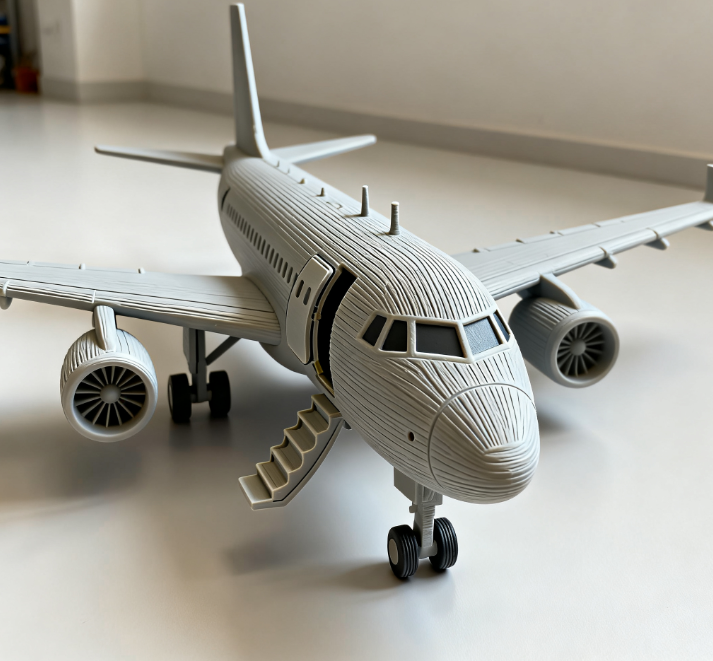
In the future, with the continuous advancement of technology, model making technology is expected to usher in new breakthroughs. The development of 3D printing technology may make the production of model parts more precise and efficient, enabling more complex shapes and details. The research and application of new materials may enable models to maintain high precision and realism while also having better durability and environmental performance. This will further enhance the quality of 1:48 scale vintage aircraft model replicas, bringing an even more ultimate collecting experience to enthusiasts.
In terms of market expansion, with the continuous popularization of global aviation culture, the market potential for 1:48 scale vintage aircraft model replicas is immense. Online sales platforms will continue to play a significant role. Through technologies such as virtual reality (VR) and augmented reality (AR), consumers can more intuitively appreciate and understand the details of the models, enhancing their desire to purchase. Events and venues such as offline model exhibitions and themed museums will also continue to emerge, providing more platforms for model enthusiasts to communicate and showcase, further promoting the prosperity and development of the market.
These models will also play a more significant role in the field of cultural dissemination. They can serve as educational aids for aviation science popularization, entering schools, science museums, and other venues, allowing more people, especially young people, to understand aviation history and technological knowledge, and inspiring their love and aspiration for the aviation industry. In the cultural industries such as film and television, games, and so on, 1:48 scale vintage aircraft model replica may also become important props and elements, disseminating aviation culture to the public in a more vivid way.
Leave a Reply